AI, Mega Rounds & Fintech Venture Capital in 2026
11 March, 2026


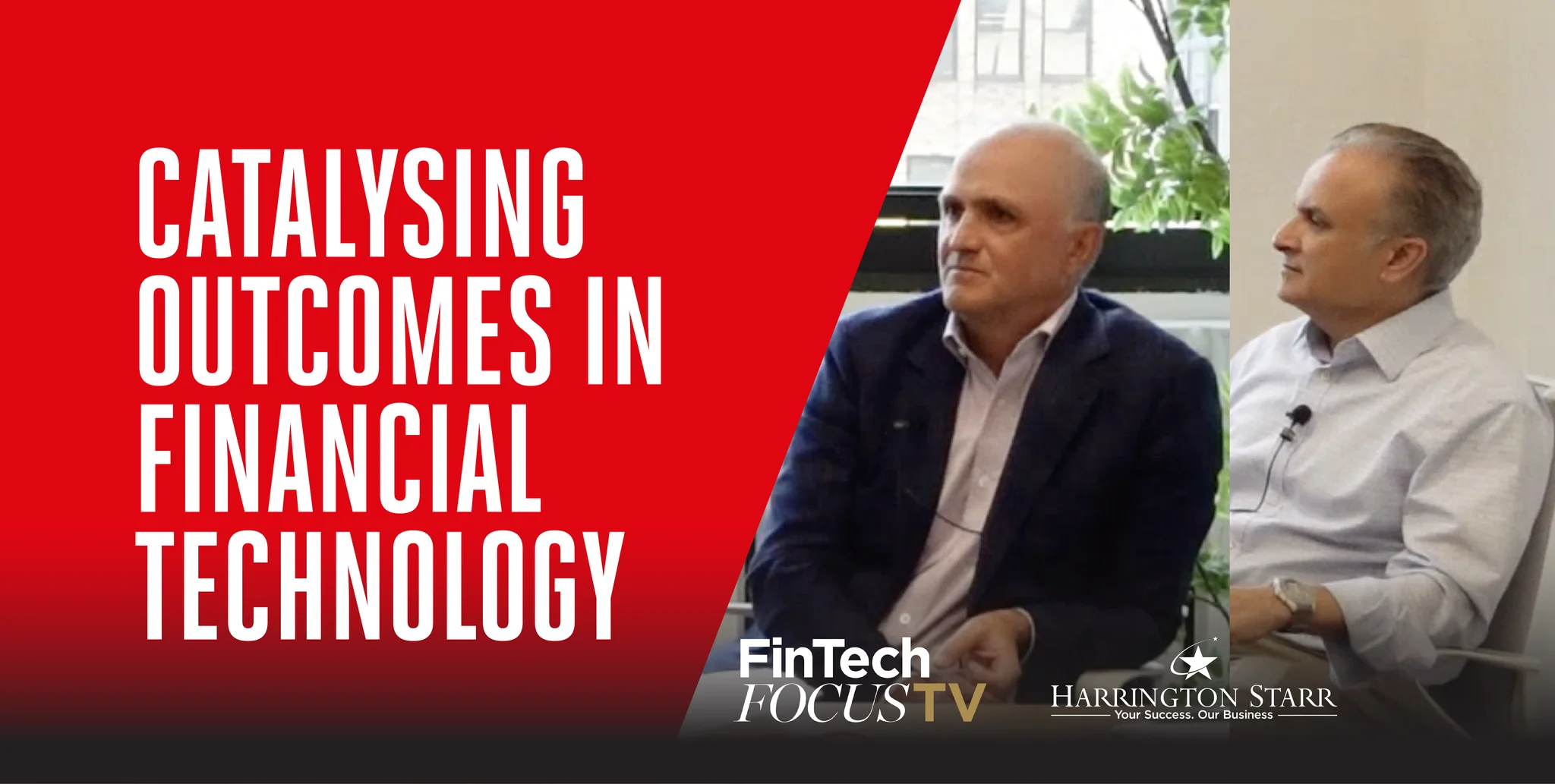
In a dynamic episode of FinTech Focus TV, recorded in New York City, Toby sits down with two leaders in capital markets innovation: Glenn Lesko and Nilesh Nanavati, two of the partners at OPCO Advisory LLC. Their story is not one of a typical consultancy or an advisory group built on PowerPoint slides and generic market reports. Instead, it is one of execution, operational expertise, and deep capital markets understanding, born from careers spent at the frontline of technology, trading, advisory, and transformation. This conversation opens a window into the formation of OPCO, how the firm is reshaping the scaling journey for FinTech companies, and why the ability to catalyse outcomes is shaping the future of financial technology.
Toby opens the episode by highlighting the shared context of the industry: an ecosystem that has experienced explosive innovation over the past twenty years, from electronic trading to networked platforms, acquisitions, roll-ups, and rapid market cycles. In a FinTech environment where recruitment, culture, leadership, and execution determine outcomes, there is a widening gap between firms that accelerate and firms that stall. For Harrington Starr and the FinTech recruitment marketplace at large, this episode offers insights into why talent and operational experience are indispensable when navigating the scale journey.
Nilesh begins by describing his career path: twenty-eight years in financial services, starting with Ernst & Young Management Consulting, running an EMS/OMS business, and then returning to advisory before spending nearly a decade working with FinTech firms. His grounding is not theoretical; it is built on the lived complexity of running and scaling operational businesses.
Glenn follows with a narrative that spans more than three decades. He begins his career in global equities, trading in Asia when it was still an emerging frontier. It takes him ten years before he even trades his first US stock. His early experience managing international desks exposes him to major waves of structural change. He later enters electronic trading, joining Instinet as the industry begins shifting away from purely manual execution. Electronic trading becomes a growth vector that reshapes global markets. During this period, Instinet is acquired by Nomura, and he leads integration efforts of their business lines in Asia. After returning to the US, Glenn eventually becomes the global CEO of Bloomberg Tradebook, where he learns additional asset classes and experiences the difference between life inside a large FinTech firm versus a broker dealer.
At Bloomberg Tradebook, he leads strategic transformation, taking the organisation from internally built routing and algorithms to best-in-breed external technology providers. This is when he encounters Dash Financial Technology, where he eventually joins and later helps integrate acquisitions, drive corporate development, and ultimately sell DASH to ION. After completing that exit, Glenn becomes a “free agent,” which sets the stage for the next phase of his career. That next step is OPCO.
The name OPCO is not a marketing gimmick or a branding flourish. In redacted legal documents, OPCO is often a placeholder for a generic operating company. For Glenn and Nilesh, the meaning goes much deeper. OPCO is an acronym grounded in their operating philosophy: Operating Partners Catalyzing Outcomes. That phrase is the mission: individuals with real operating and advisory backgrounds working collaboratively to help companies within the capital markets ecosystem achieve measurable outcomes.
They describe OPCO as a team of people who have lived through the scars of execution, not simply studied it. Their services are not built on theoretical frameworks or slide decks. They are built on decades of actually delivering projects in mission-critical environments. Where traditional consultancies might present research, deliver reports and walk away, OPCO embeds, designs, executes and alters outcomes. Their culture is action-oriented, not advice-oriented. It is what makes the firm valuable to FinTech founders, investors, institutional leaders and capital markets innovators.
Over the first five years of OPCO’s development, the partners refined their model into three core service verticals. The first is Strategic Collaboration. In capital markets, innovation is often driven not by isolated disruption but by collaboration between institutions, vendors or regulatory actors. OPCO has supported the creation of multiple consortia, including Octaura and Versana, which are built around unique industry needs and asset classes. These are not speculative partnerships; they are models of shared innovation designed to unlock new ways of working.
Rather than advising companies from the sidelines, OPCO works to catalyse collective outcomes. Collaboration becomes a mechanism for de-risking transformation, especially within ecosystem players that historically move slowly. In an industry where procurement cycles suffocate many FinTech companies and the wrong timing can bankrupt even the strongest product, shared innovation becomes a necessary strategy.
The second service vertical, FinTech Scale, emerged organically. From the day OPCO opened its office, emerging FinTech firms arrived through referrals and network introductions. Many of these companies came from people who had worked with the partners in their previous careers.
The challenge was not finding FinTech clients. It was determining how to best help them. Founders needed capital, introductions, business development support, product market refinement, messaging clarity and client access. They needed execution. Glenn estimates he has personally met more than three hundred emerging FinTech companies since OPCO’s inception. Through trial, iteration and repeated engagement, OPCO crystallised FinTech Scale into a model that founders are willing to pay for, because it delivers value.
The work spans reviewing go-to-market strategies, analysing product communications, understanding segmentation, redesigning positioning, and preparing companies to meet prospective clients, sources of capital, talent or partners. OPCO does not simply advise; it helps execute. It engages its network and leverages proprietary tools to optimise engagement with buyers and capital sources.
FinTech Scale is anchored not only in people but in infrastructure. OPCO has built the FOP database, a taxonomy of approximately 4,500 capital markets FinTech companies mapped in a modern, operationally useful way. The database allows firms to benchmark the perception of their business against competitors, partners and collaborators. They are also building the Connected database: a dataset of 31,000 capital markets professionals who are known personally within OPCO’s extended network. These are not scraped LinkedIn contacts. They are people OPCO has real relationships with.
That database is matched with a distributed go-to-market team spanning the US, Europe and Asia. These professionals contact prospects, expand networks, and open doors. Around this, OPCO has forged partnerships with key providers such as Hedge ID for prospect data and Myth Maker for digital execution, bridging message, product and outreach. The result is an operating system for scaling capital markets FinTech businesses that goes well beyond traditional advisory.
The third vertical is Investor Partnerships. OPCO works with growth equity, venture capital and private equity firms in multiple ways. They support due diligence with market reality rather than detached statistical analysis. Investors rely on them not for generic market sizing but for the “aha” insight that changes the deal decision. OPCO informs investors on the individuals leading the businesses, the products being sold, and how these solutions are perceived in the market. Their value comes from the scars of experience and their ability to bring deep domain intelligence built over decades.
Beyond diligence, OPCO helps investors identify thematic opportunities, including roll-ups, consolidations and end-to-end solution combinations. When portfolio companies need performance improvement, OPCO supports leadership teams. When large FinTech institutions seek inorganic expansion, OPCO assists corporate development to identify where meaningful acquisitions exist.
When Toby asks about common themes FinTech firms struggle with, Glenn is clear: institutional clients are risk-averse. They deal with their own technology deficits and are fearful of full platform replacements. Large roll-up vendors such as Broadridge, SS&C and ION maintain leverage through multi-year contracts and bundled service structures. This creates a buyer psychology based on minimising disruption, not maximising innovation.
The result is a complex ecosystem in which vendors need to design their platforms for composability. Rather than asking clients to rip out legacy systems, FinTech providers must solve single problems, deliver meaningful results and expand from there. Additionally, they need architecture flexible enough to absorb new asset classes, public and private securities, digital instruments and tokenised vehicles. Firms that fail to build with this mindset suffocate before they can reach enterprise adoption.
The episode shifts toward emerging growth vectors. Blockchain and tokenisation have moved beyond speculative hype. Regulatory clarity is creating sandboxes where real innovation is possible. New asset types are materialising, including tokenised diamonds, art, power markets and even electricity trading. The ESG movement, the surge in AI power consumption and broader shifts in trading behaviour are stimulating entire new markets.
OPCO sees these markets as early versions of what once happened in listed securities, where digital transformation, data and market structure evolved into functioning, liquid markets. The same dynamic is unfolding in fixed income, where OPCO has worked with firms using electronic trading techniques in municipal bonds. The trajectory is the equitisation of assets: the application of market structure and liquidity principles to categories that historically resisted them.
Toby asks a critical question: what separates the companies that succeed from the companies that stall or fail. Glenn rejects the simplistic criteria often used by investors. In capital markets, addressable market size is not the primary driver of success. Instead, successful companies arrive with something truly innovative, something their clients cannot build themselves, timed to when the market is ready to adopt it. Too many founders are early or rigid, locked into a dogmatic view of how their solution must be delivered.
He notes that over-eagerness to collect channel partnerships without designing meaningful execution paths is a common trap. Logos do not replace strategy. Partnerships need to be purposeful and monetisable. OPCO’s own intake form forces founders to discuss topics they avoid: competitors, current alternatives, how clients are solving the problem today. Many entrepreneurs believe they have no competition. The reality is that markets always have workarounds. The question is not whether a competitor exists but whether the FinTech solution is more compelling.
OPCO encourages founders to build companies that are strategically attractive from the outset. In capital markets, exit opportunities are often acquisitions, not retail-scale platform plays. The path to success is not millions of users; it can be ten institutional clients. The talent, resilience and flexibility of the founding team determines whether the company makes it.
The episode concludes with a simple invitation. OPCO’s network is deep. Many watching likely already know someone connected to the firm. They hold quarterly events, building an expanding community of capital markets leaders and innovators. They are accessible by phone, email or direct outreach and remain client-centred in everything they do.
Their ideal partners include investors conducting real diligence, FinTech companies seeking to scale, and firms pursuing collaborative business models where consortiums may outperform standalone strategies. The partners emphasise that they are not simply service providers. They are operating partners catalysing outcomes.
For FinTech recruitment firms like Harrington Starr, this conversation reinforces a core truth of the industry. Talent is the differentiator. Product-led founders must still know how to sell, founders with strong networks need operational depth, and domain experts must learn how to communicate strategic value. The future of FinTech will belong to companies that combine exceptional talent, real-world execution, and collaborative ecosystem thinking. In a world where procurement cycles, roll-ups and risk aversion create barriers, the companies with the right people are the ones who will break through.