The Changing Face of Leadership in Financial Technology
12 March, 2026
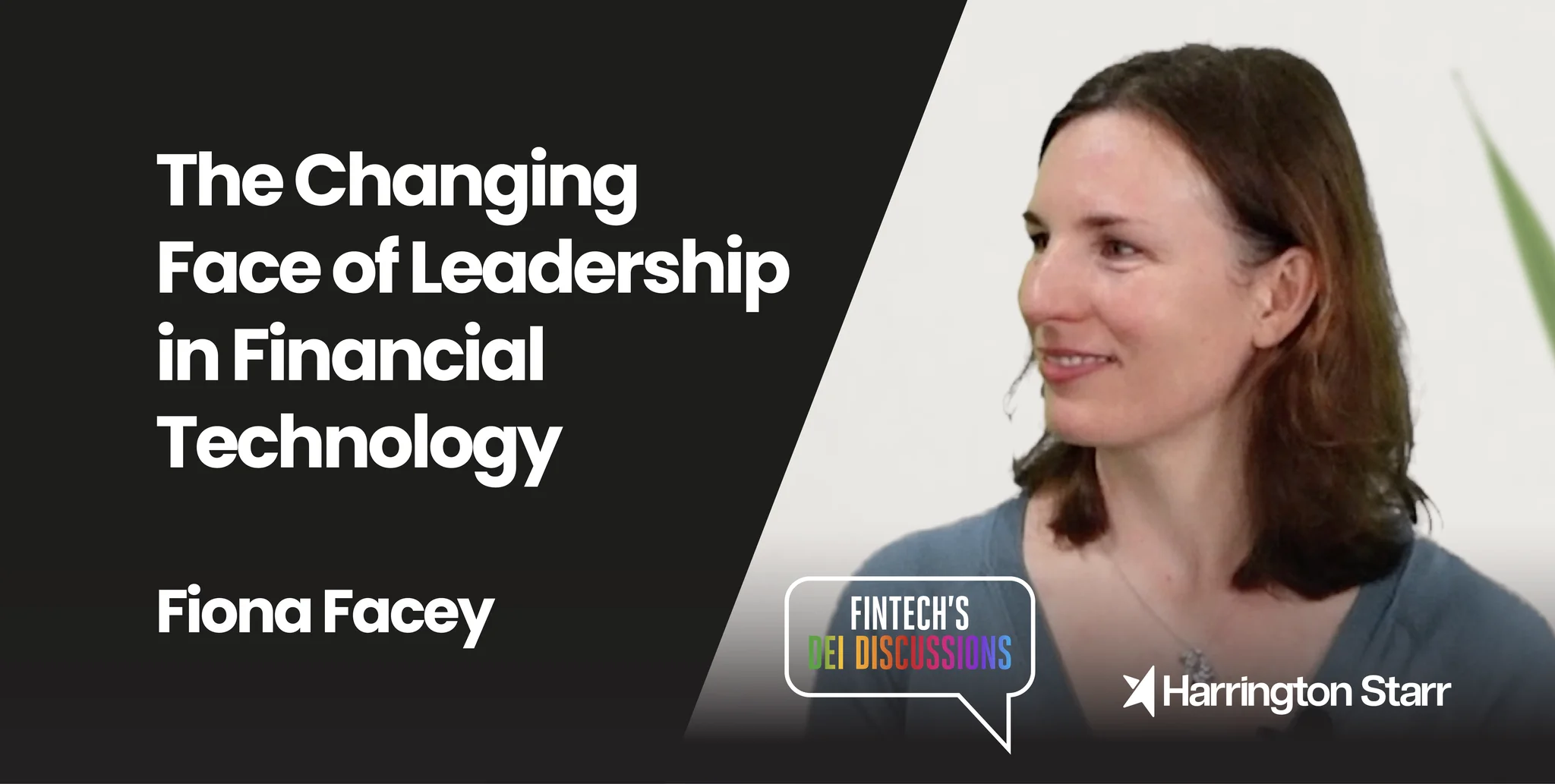

In this episode of FinTech’s DEI Discussions, Nadia sits down with Jessica Rhodes, Global Marketing Director at Paysecure, for a wide-ranging conversation about inclusion, confidence, the evolving world of work, and the small daily behaviours that transform company culture. For anyone across the FinTech recruitment landscape, whether hiring talent, shaping culture, or looking for FinTech jobs that support genuine belonging, this discussion offers a rich, human look at what meaningful inclusion actually looks like in practice.
Jessica begins the conversation by introducing her role at Paysecure, a global payment orchestration platform supporting merchants in high-risk and high-volume sectors. Her team helps clients optimise acceptance rates, orchestrate their payment flows, and ultimately deliver a stronger, more seamless customer experience. But while her current role sits within the global payments ecosystem, her career path certainly wasn’t linear. As she puts it, her professional journey has been “a very squiggly career”, one that has always sat at the intersection of people, creativity, and technology.
She speaks candidly about working across a variety of technology-driven businesses and finding roles that allowed her to experiment, stretch herself, and stay curious. These opportunities allowed her to build teams that feel safe to show up authentically, a principle she believes is fundamental to great leadership and great culture.
For FinTech organisations looking to attract and retain top talent, these insights are invaluable. Candidates aren’t just looking for competitive FinTech jobs. Increasingly, they’re looking for workplaces where inclusion is felt, not just spoken about, and where individuality, curiosity and experimentation are encouraged.
When Nadia asks Jessica what inclusion means to her right now, she takes a thoughtful pause before offering a nuanced response.
For Jessica, inclusion isn’t simply a policy; it’s an environment. It’s the feeling that people can speak, experiment, ask questions, make mistakes and be wrong, without fear of judgement or repercussion. This psychological safety has shaped her entire career journey. She explains that she wouldn’t be where she is today if past leaders hadn’t allowed her the room to test ideas, fail safely, and learn openly.
In today’s rapidly evolving sector, particularly in FinTech, where innovation is relentless and competition for talent is fierce, companies that build trust, encourage experimentation, and remove fear of failure are the ones that stand out. FinTech recruitment trends increasingly show that candidates prioritise environment alongside career progression, and Jessica’s perspective reinforces that point clearly.
She also highlights something often overlooked in inclusion conversations: who speaks in meetings. Inclusion isn’t only about representation; it’s about participation. Who gets the airtime? Whose ideas are heard? Who is invited into the conversation?
And perhaps most powerfully, she references a quote that has shaped her approach to culture:
“Diversity is being invited. Inclusion is being heard. Belonging is being valued.”
This reminder, to acknowledge, listen, and then take action, is at the heart of what inclusive FinTech workplaces must prioritise.
For companies competing for talent in London, Belfast, New York and across global FinTech hubs, this is crucial. The strongest employer brands in FinTech jobs today are those that don’t rely on box-ticking, but instead embed belonging into everyday behaviours.
Jessica’s openness makes this episode particularly impactful. When the conversation moves to workplace confidence, especially for those progressing through FinTech careers or returning to work after time away, she offers one of the most relatable insights of the episode.
Though she always considered herself confident, she explains that confidence is not fixed or innate. Instead, it is something that must be nurtured. Earlier this year, she joined a marketing public-speaking programme called The Keynote Club, where she found herself unexpectedly nervous about speaking in front of peers she admired. This experience made her realise how much confidence can fade when not consistently exercised.
As she describes it, confidence is like a muscle, one that requires stretching, testing, and continuous use.
This metaphor resonates strongly across the FinTech recruitment narrative. Candidates stepping into new FinTech jobs, leaders taking on greater responsibility, or returners navigating new rhythms all face confidence gaps. FinTech organisations that understand this and create structures to support confidence-building not only foster better internal culture but also improve employee retention.
But confidence building, Jessica stresses, is never just the individual’s responsibility. While people need to push themselves, organisations must offer the scaffolding, space in meetings, opportunities to contribute, and the trust to let employees do the jobs they were hired for. It is this combination of self-drive and organisational support that creates confident, high-performing teams.
One of the most powerful sections of the conversation revolves around returning to work after parental leave, an area deeply relevant to both candidates seeking FinTech jobs and employers shaping supportive environments.
Jessica describes how challenging it was to step away from her career, not because of culture, but because she struggled personally with letting go. She found it equally daunting to return, but ultimately transformative.
Her message is clear:
You are not the same person when you return to work. And that is not a disadvantage.
Returning professionals bring new levels of empathy, perspective, and time management skills that elevate their performance. Jessica proudly states that she feels more productive now than ever before.
But she also highlights a major misconception across FinTech hiring practices: flexibility is not a favour. It is not a perk, nor a bonus, nor an exception. It is a levelling mechanism, a structure that supports exceptional talent through real life.
She emphasises the importance of employers recognising that every returner’s experience is different. Some may need time to step back. Others return more driven than ever, fuelled by a renewed sense of purpose and ambition. Companies that acknowledge this spectrum and trust employees accordingly are the ones that build loyal, high-performing teams.
For FinTech recruitment businesses like Harrington Starr, stories like Jessica’s underline why inclusive hiring practices matter. When organisations adapt thoughtfully, they secure stronger, more committed employees, a competitive advantage in a crowded FinTech talent market.
Jessica’s role as Global Marketing Director offers unique insight into how authentic messaging shapes both brand reputation and internal culture. She explains that marketing is not just commercial; it is emotional. It tells the story of a business’s people, purpose and values.
She strongly believes that people buy from people, especially in SaaS and FinTech, where relationships often define the sales cycle. Long deal cycles require trust and connection, and that trust must be reflected in external messaging.
Jessica points out that in today’s digital landscape, you simply cannot hide behind false claims. Authenticity isn’t optional. Employees should feel proud of the messages their company shares externally, and customers must feel connected to real stories, not corporate spin.
The most successful content Paysecure produces, from partner stories to event soundbites, performs well not because it’s flashy, but because it’s genuine.
This directly intersects with FinTech recruitment. Candidates are drawn to authentic brands. Job seekers in the FinTech space want to work for companies whose values aren’t performative. Real stories attract real talent, and the strongest employer brands understand this.
As FinTech hiring accelerates globally, companies investing in authentic employer branding now will be the ones securing the best talent later.
In closing, Jessica offers a grounded, practical perspective on what it means to truly drive inclusion. Many people assume you need large teams, big budgets, or formal programmes to create inclusive environments, but she believes the opposite.
Inclusion begins with small daily behaviours, listening, acknowledging, connecting, and creating moments for people to speak and be heard.
She has worked in both large organisations with corporate social responsibility committees and small startups with fewer than twenty employees. Both environments can be inclusive when people prioritise everyday behaviours rather than waiting for formal frameworks.
Leadership direction is still essential, she says. Leaders must set expectations, shape recruitment processes thoughtfully, and model inclusive behaviours. But inclusion is not owned solely by HR or senior leadership.
Inclusion is everyone’s job, every employee, every day, with every interaction.
For FinTech companies competing for top talent, this message is vital. Inclusion is no longer a differentiator; it is an expectation. The businesses that embed belonging into everyday culture are the ones that attract, develop and retain the strongest talent.
And for FinTech recruitment partners like Harrington Starr, helping clients build these cultures is central to advising on sustainable hiring, inclusive team-building and long-term workforce strategy.
This episode of FinTech’s DEI Discussions provides a compelling look at what real inclusion looks like through the lens of someone who has lived it, built it and continues to advocate for it.
Jessica Rhodes brings honesty, clarity and humanity to conversations about confidence, parental leave, authenticity in marketing, and daily habits that anchor inclusive workplaces. Her reflections offer meaningful lessons for FinTech leaders, hiring managers, candidates and organisations striving to build cultures where people can truly belong.