AI, Mega Rounds & Fintech Venture Capital in 2026
11 March, 2026


The financial services industry is entering a pivotal phase of digital transformation. Few developments capture this transition more clearly than the rapid rise of tokenisation and real-world asset (RWA) infrastructure. At FinTech Connect 2025, one of Europe’s most influential financial technology conferences, this topic dominated conversations across trading, infrastructure, and capital markets technology.
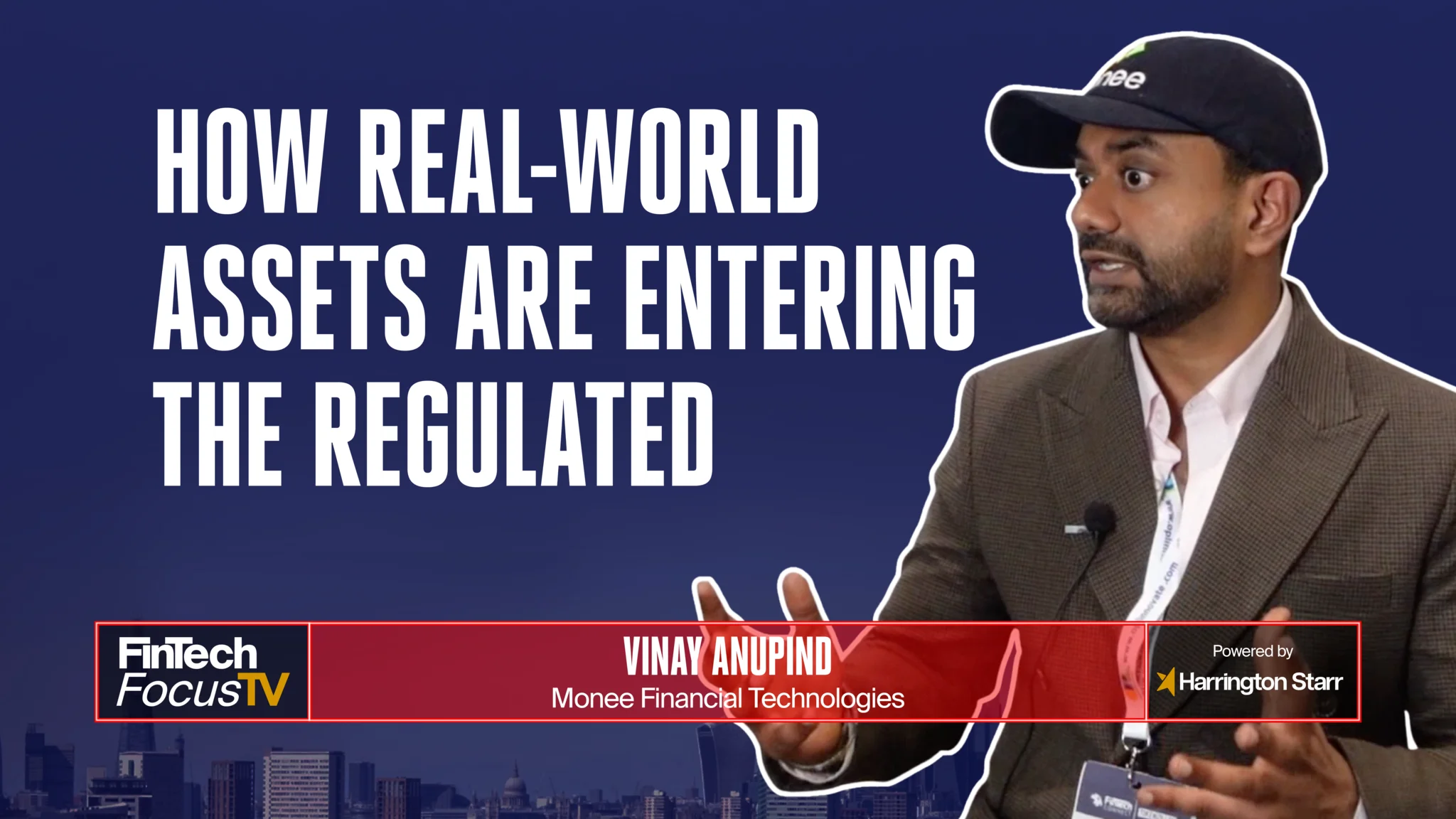
In this episode of FinTech Focus TV, recorded live at the event, Toby Babb, CEO of Harrington Starr, sits down with Vinay Anupindi, Co-Founder at Monee Financial Technologies, to explore how tokenisation could reshape financial markets and what will ultimately determine whether institutional investors adopt digital asset infrastructure at scale.
Their discussion offers valuable insight into the intersection of blockchain technology, regulatory frameworks, and institutional financial infrastructure, highlighting why compliance and operational practicality will play a decisive role in the next stage of fintech innovation.
For financial services leaders, fintech professionals, and organisations hiring across capital markets technology, the conversation reveals how tokenisation is moving from theoretical discussion into practical implementation.
Vinay Anupindi describes Monee Financial Technologies as a digital financial market infrastructure startup, a term that reflects the growing evolution of financial technology companies building foundational systems rather than consumer-facing applications.
In simple terms, the company operates in the tokenisation space, a rapidly expanding area of fintech innovation focused on converting traditional financial assets into digital securities using blockchain technology. Tokenisation allows financial instruments to exist in digital form while maintaining the underlying economic characteristics of the asset itself.
At its core, tokenisation involves taking real financial assets—such as securities, funds, or other financial instruments—and representing them digitally through blockchain-based systems. These digital representations, often referred to as tokenised assets, can then be traded, transferred, and managed using modern infrastructure.
This concept has become one of the most widely discussed innovations in financial markets. However, as Vinay explains during the episode, the practical implementation of tokenisation requires far more than simply applying blockchain technology to financial assets.
Instead, the transition requires an entirely new layer of institutional-grade infrastructure, designed to operate within regulatory frameworks and interact seamlessly with existing financial systems.
The conversation between Toby and Vinay takes place shortly after Vinay has appeared on a panel at FinTech Connect, where industry experts discussed the requirements for institutional adoption of tokenised real-world assets.
Real-world assets, often abbreviated as RWAs, refer to traditional financial instruments or tangible assets that are represented digitally on blockchain infrastructure. While the concept has been discussed extensively within Web3 communities, Vinay emphasises that institutional adoption requires a far more structured and compliant approach.
According to the panel discussion, which included experienced industry participants, there is a broad consensus emerging across the financial technology sector. While security and technology remain important considerations, the real barrier to adoption lies in compliance, regulation, and operational integration.
Institutional investors need clarity about how digital assets are managed, where they are custodied, and whether those assets exist within legally recognised frameworks. Without this level of assurance, financial institutions will remain cautious about adopting new infrastructure.
This insight highlights a fundamental difference between early blockchain innovation and the emerging institutional phase of fintech development.
One of the most compelling aspects of the conversation is the emphasis on compliance and regulatory frameworks as the true foundation for institutional digital asset adoption.
Vinay explains that many participants within the Web3 ecosystem have historically focused heavily on technology, often overlooking the practical requirements that financial institutions must meet before participating in new markets.
For institutional investors, operational questions are just as important as technological innovation. Financial institutions must understand how assets are held in custody, whether those holdings are segregated from potential bankruptcy risk, and how digital assets integrate with existing reporting and accounting systems.
Following high-profile events in the digital asset space—such as the collapse of FTX—investors have become increasingly focused on transparency and governance. They want to know that assets are held within regulated custody environments and that the underlying infrastructure complies with financial regulations.
Vinay notes that tokenisation systems must also allow institutions to perform familiar financial operations. These include activities such as re-collateralisation, reporting, and transaction processing, all of which must function seamlessly within established workflows.
This emphasis on operational compatibility represents a critical step in bridging the gap between traditional financial markets and emerging blockchain infrastructure.
A major milestone discussed in the episode is Monee Financial Technologies’ participation in the Digital Securities Sandbox, a regulatory initiative developed by the Bank of England and the Financial Conduct Authority (FCA).
This programme is designed to enable innovative companies to test digital securities within a regulated environment while regulators develop new licensing frameworks for emerging technologies.
For fintech startups operating in the tokenisation space, participation in the sandbox represents a significant validation of their approach. It provides an opportunity to test real-world applications while working directly with regulatory authorities.
Vinay explains that the company spent approximately six years building its platform before entering the programme. During this time, the team focused on developing partnerships, building infrastructure, and ensuring the technology aligned with regulatory expectations.
For much of this period, the company operated in stealth mode, concentrating on product development rather than public promotion. With regulatory engagement now underway, the company has begun emerging publicly and engaging with the wider fintech ecosystem.
The sandbox environment offers a pathway for digital securities innovation while maintaining oversight from regulators responsible for financial stability.
Another theme explored during the episode is the growing validation of tokenisation as large financial institutions begin exploring the technology.
Over the past few years, organisations such as JP Morgan and BlackRock have increasingly entered the digital asset space, experimenting with tokenised financial products and blockchain-based infrastructure.
According to Vinay, this level of institutional engagement has created significant momentum across the fintech ecosystem. The involvement of well-established financial institutions signals that tokenisation is moving beyond experimental technology into a potential component of mainstream financial infrastructure.
For smaller fintech companies building digital market infrastructure, this shift provides strong validation that the industry is heading in the right direction.
Interestingly, Monee Financial Technologies has built its platform through bootstrapping rather than external venture capital funding. As the company becomes more visible within the market, investors have begun approaching the business directly.
This dynamic highlights how innovation within financial technology often begins quietly, with long periods of development before emerging into broader industry recognition.
Looking ahead, Vinay outlines an ambitious roadmap for the company’s future expansion.
Following participation in the UK’s Digital Securities Sandbox, the business plans to explore similar regulatory programmes in other jurisdictions. One area of focus is engagement with the Central Bank of Ireland, enabling potential expansion into European markets.
Beyond Europe, Vinay highlights the potential opportunities within emerging markets across Africa and Asia. These regions often have fewer legacy financial systems, which can make them more receptive to new infrastructure technologies.
Without deeply entrenched legacy platforms, financial systems in these regions may be able to adopt digital financial infrastructure more rapidly.
Vinay suggests that 2026 could become a significant year for the company, with plans to secure additional licences, expand geographically, raise funding, and build a broader community around its technology.
The ambition reflects the wider momentum within fintech as tokenisation moves from concept to implementation.
While the episode focuses primarily on tokenisation and digital infrastructure, it also highlights the broader transformation underway within financial technology.
As fintech companies build new platforms for capital markets and financial services, the demand for specialised talent continues to grow.
Firms developing digital financial infrastructure require expertise across areas such as blockchain engineering, regulatory technology, cloud architecture, and capital markets systems integration.
For organisations navigating this transition, access to the right talent becomes a critical factor in successful innovation.
As a FinTech recruitment business, Harrington Starr operates at the centre of this evolving ecosystem, working with companies building the next generation of financial technology platforms.
Conversations like this episode of FinTech Focus TV provide valuable insight into the challenges and opportunities shaping fintech innovation, helping industry leaders understand where the market is heading and how talent requirements are evolving.
The conversation between Toby Babb and Vinay Anupindi ultimately paints a picture of a fintech industry entering its next phase.
Tokenisation and blockchain infrastructure have captured widespread attention over the past decade, but the real transformation will depend on whether these technologies can operate within the regulatory frameworks and operational systems that underpin global financial markets.
Institutional adoption will not be driven by hype or experimentation alone. Instead, it will require robust infrastructure, regulatory clarity, and compatibility with the existing financial ecosystem.
As fintech continues to evolve, the intersection of innovation, compliance, and talent will determine how quickly these technologies move from emerging concepts into the core architecture of financial markets.
Recorded live at FinTech Connect 2026, this episode of FinTech Focus TV offers a valuable perspective on how tokenisation, digital assets, and financial infrastructure are beginning to converge.
For fintech leaders, investors, and professionals working across financial technology, the message is clear: the future of digital assets will be built not just on innovation, but on trust, regulation, and institutional readiness.