Building Resilient Careers in Financial Technology
26 March, 2026


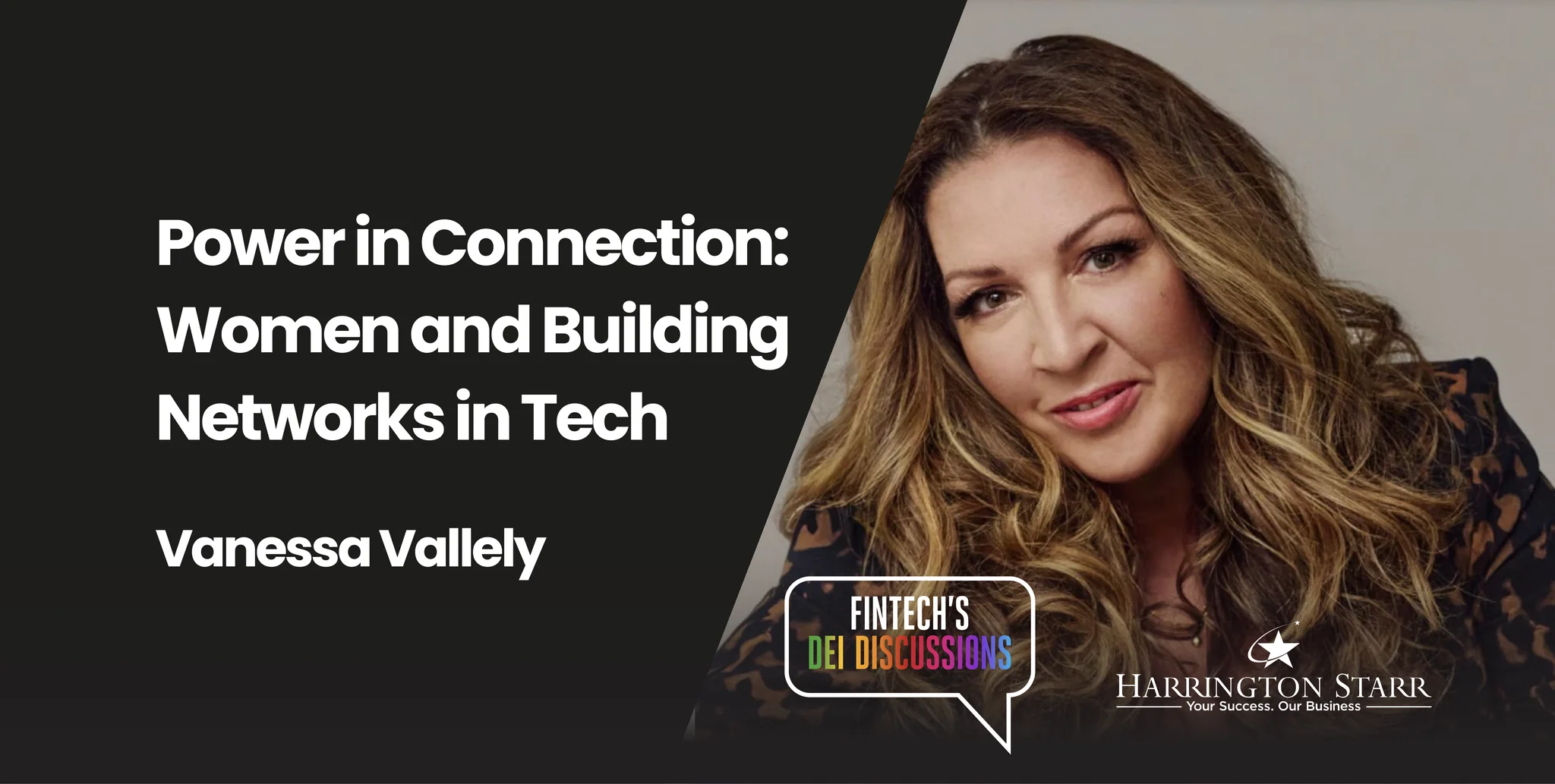
In this powerful episode of the Turn to Tech podcast series, powered by FinTech’s DEI Discussions in partnership with the City of London Corporation and Women Pivoting to Digital Taskforce, Nadia welcomes Vanessa Vallely, OBE, CEO and Founder of WeAreTheCity and WeAreTechWomen. The discussion highlights not only Vanessa’s remarkable and unconventional journey into tech, but also the systemic barriers preventing women from entering and staying within the sector, barriers that businesses, leaders, and the wider FinTech ecosystem must urgently address.
Nadia opens the episode by grounding listeners in the purpose of the Turn to Tech series: 12-part mini-podcast journey profiling women who have successfully pivoted into digital roles from non-technical backgrounds. The intention is clear, to demystify tech careers, uncover the transferable skills women already have, and provide practical signposts for anyone considering a move into digital or FinTech jobs.
For Vanessa Vallely, the importance of Turn to Tech is obvious and urgent. She shares that, according to the Lovelace Report, only around 20% of the tech workforce is made up of women, and entry rates remain slow. Even more concerning is that women exit the industry faster than men, meaning the sector loses critical talent at the very moment demand for digital and FinTech skills continues to skyrocket.
As a FinTech recruitment business, Harrington Starr sees these market trends reflected daily. FinTechs, banks, digital consultancies, and payment providers all face intense competition for skilled tech talent, from software engineers to data specialists to cyber professionals. When half the potential workforce feels disconnected or unsupported, the talent shortage deepens. Vanessa’s message reinforces something we see across our own hiring ecosystem: solving the digital skills gap requires bringing more women into technology, but that won’t happen without clear pathways, community support, and systemic change.
Turn to Tech aims to be one part of that solution, providing actionable insights, inspiring stories, and accessible guidance for women considering a shift into digital roles, FinTech careers, or technology-related pathways.
Vanessa’s professional story is a testament to non-linear career journeys, something highly relevant in today’s FinTech hiring landscape, where employers increasingly value adaptability, transferable skills, and lived experience over rigid career ladders.
She began her career at just 16 years old at NatWest, working in a room responsible for ripping off telexes, sorting SWIFT messages, and physically distributing them throughout the building. This was her first exposure to the world of technology, not through deliberate intention, but through proximity to emerging digital systems that were beginning to transform the banking sector.
From there she joined a computer company supplying hardware and software to the City. Her standout skill? She knew how to turn a computer on, something surprisingly rare at the time. Because her school had introduced computers in her final year, Vanessa possessed digital literacy that surpassed many professionals in financial services.
This ability opened up new opportunities:
She began teaching software, then launched her own business at 22 years old, and later moved into technical support. Eventually, she transitioned into the PMO (Project Management Office) to gain exposure to project delivery, then progressed into Project Manager, Programme Director, Chief of Staff, and ultimately COO roles within the financial sector.
Her journey, “squiggly,” as she describes it, emphasises a powerful message: the pathway into tech does not need to be linear. Women do not need computer science degrees or a coding-first background. FinTech and digital careers welcome individuals with curiosity, practical experience, and transferable capabilities such as communication, stakeholder management, organisation, and problem-solving.
For organisations recruiting in FinTech, whether for digital transformation teams, software roles, product management positions, or operations, this episode reinforces an important hiring truth: brilliance exists far outside traditional pipelines.
A central theme of the podcast is the power of community. Vanessa is widely recognised for building some of the UK’s most impactful women's networks, including WeAreTheCity and WeAreTechWomen. When Nadia asks why networks matter so deeply, Vanessa’s response is simple: “Because we need people.”
Careers, particularly in fast-moving sectors like FinTech and technology, are built through relationships, information sharing, mentorship, sponsorship, and support. Women entering digital roles often cannot rely on informal networks that have historically benefited their male peers. Creating dedicated spaces helps address that imbalance.
Vanessa explains that communities offer safe spaces where women can share experiences, exchange advice, and receive targeted support. Whether someone is at the beginning of their career or stepping into leadership, these spaces give individuals access to collective knowledge they might not otherwise encounter.
She also highlights the “magic” that happens when women connect, from job opportunities being shared in WhatsApp groups, to confidence being built through supportive peer-to-peer conversations, to advice flowing across different career stages. For FinTech employers, building or supporting these networks can significantly enhance retention, engagement, and progression for women in digital roles.
Vanessa and her organisation have created over 50 different communities, from award-winning cohorts to conference attendee groups, emphasising that connection is not a luxury, it is a foundational tool for career progression.
This idea is increasingly relevant in FinTech recruitment. Candidates prioritise environments where they can learn, grow, and feel supported. Employers who invest in ERGs, mentorship programmes, and peer-support systems gain a competitive advantage in attracting high-calibre digital talent.
Nadia raises an important point: Vanessa not only builds communities but actively encourages other women to create their own support networks. Why is this important? Existing networks may not reach every niche, location, or specialism.
Vanessa explains that although there are around 150 women’s networks across various industries, gaps still exist, particularly for women in more remote regions or highly specific technical disciplines. She urges women not to wait for formal structures to appear. Instead, they can use platforms like LinkedIn to find others with similar roles or challenges and form small peer groups.
Crucially, she emphasises that a community does not need to be large to be effective. A group of ten supportive, committed individuals can have as much impact as a community of hundreds. What matters is quality, trust, and active participation.
Her message resonates powerfully with the Turn to Tech initiative: if the tech industry wants more women, including career changers seeking opportunities in FinTech, AI, cloud engineering, DevOps, data analytics, cyber security, or digital product roles — then those women need access to networks that help them navigate unfamiliar landscapes.
For many women exploring digital or FinTech jobs, networking can feel intimidating. Vanessa openly acknowledges this. Even as a seasoned network builder, she sometimes feels daunted walking into a room full of strangers.
Her advice is straightforward and actionable:
Don’t go alone.
Find someone who feels the same and attend an event together. Moving as a pair builds confidence and lowers emotional barriers.
She also highlights the importance of curiosity. Networking is not about performing; it’s about listening, learning, and understanding. Women can introduce each other, share stories, or simply observe, all of which build relational foundations.
This is particularly important in FinTech, where networking often leads to job opportunities, mentorship, partnerships, or industry visibility. For candidates entering digital careers, community connections serve as a powerful accelerator.
Vanessa reflects on the absence of accessible communities early in her career. At that time, most networks catered exclusively to senior women and were either expensive or invitation-only. Today, the landscape is far more diverse and inclusive.
She highlights groups such as She Bites Back, The Jago, Halak, Makers Academy, Code First Girls, and Black Coding Females, along with regional groups, including those led by Becky Taylor in the North. She also notes that WeAreTheCity hosts a directory of networks and an extensive event calendar.
For women exploring FinTech careers, particularly those transitioning from non-technical fields, these communities offer access to training, mentoring, confidence-building, and industry insight.
The final section of the conversation shifts to the organisational responsibility in addressing gender imbalance. Vanessa stresses that while many companies have ERGs, there is a growing trend of Women in Tech-specific ERGs, which reflects a growing recognition of the issues faced by women in digital roles.
She cites the Lovelace Report again, warning that companies face a £2–3.5 billion annual loss by failing to develop their female tech workforce. Up to 40,000–60,000 women are leaving tech roles, often due to a lack of development, recognition, or equitable pay.
The conversation between Nadia and Vanessa Vallely, OBE, serves as an inspiring reminder that digital and FinTech careers are accessible, dynamic, and filled with potential. But meaningful change requires community, visibility, and organisational accountability.
Turn to Tech exists to highlight pathways, demystify digital roles, and inspire women to take the leap into technology. At Harrington Starr, we see firsthand how vital diversity is to building high-performing FinTech teams, and this episode reinforces the urgency of supporting women at every stage of their digital career journey.