Building Resilient Careers in Financial Technology
26 March, 2026

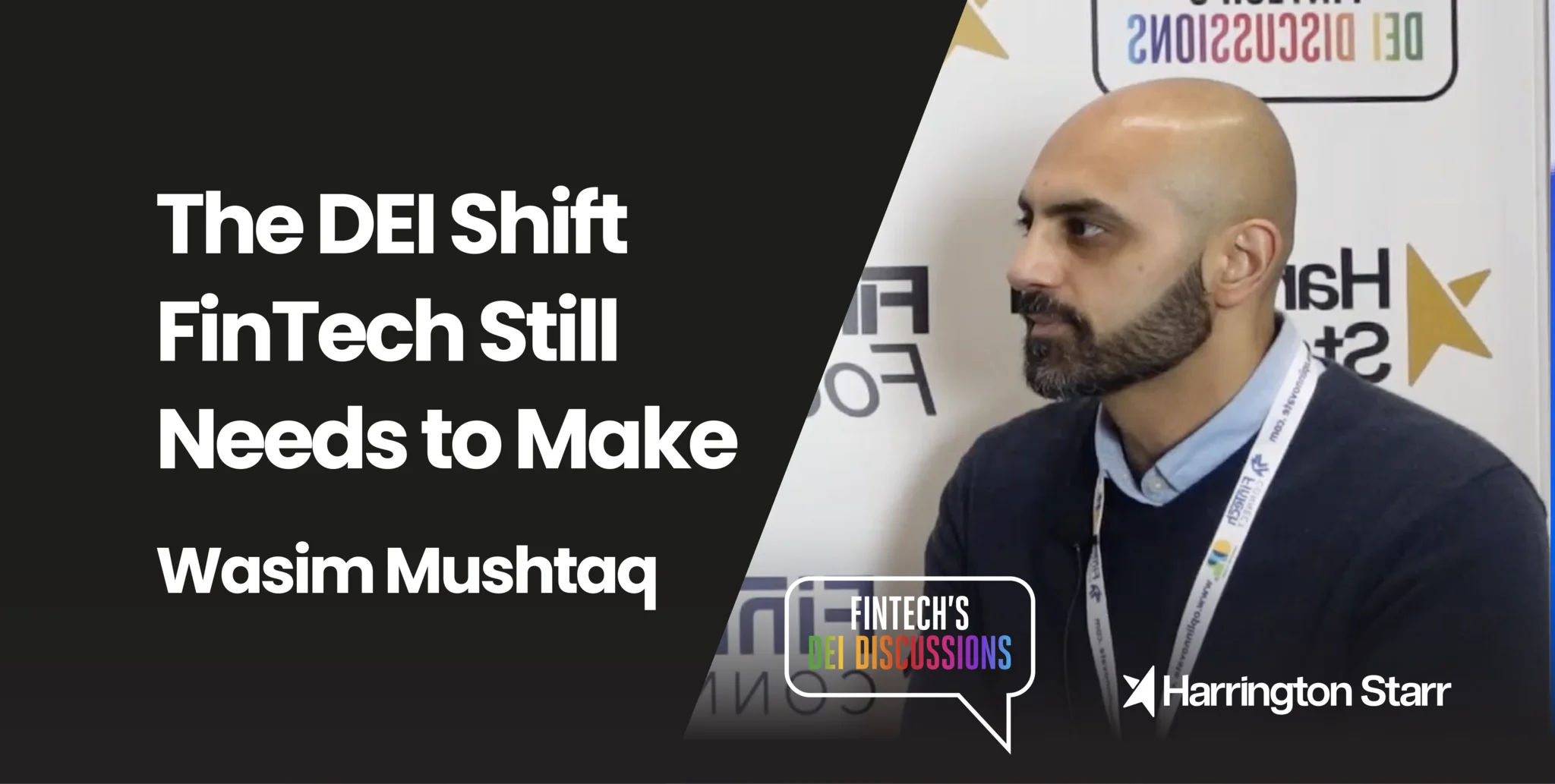
Recorded live at FinTech Connect 2025, this episode of FinTech’s DEI Discussions brings together Nadia and Wasim Mushtaq, Founder of 1CG, for a personal and practical conversation about diversity, equity, inclusion, and what it truly means to “walk the talk” in financial technology.
From the very beginning, the tone of the conversation is set around authenticity rather than performance. Nadia opens the discussion by reinforcing the purpose of FinTech’s DEI Discussions: to celebrate progress, confront challenges honestly, and focus on inclusive change that has real impact across the FinTech industry. With the podcast recorded live at the 10th anniversary of FinTech Connect, the setting provides a powerful backdrop for a discussion centred on reflection, accountability, and the future of inclusive leadership in financial services.
Wasim’s presence on the podcast marks his second appearance, and as Nadia highlights, his title alone barely scratches the surface of his experience. What follows is not a surface-level DEI conversation, but an in-depth exploration of lived experience, leadership responsibility, and the structural realities that still shape opportunity in FinTech today.
Wasim begins by walking through his career journey, grounding the conversation in experience rather than theory. A Glaswegian by background, he entered the financial services industry through business banking in Glasgow before moving into major institutions during some of the most turbulent years the sector has faced. His time at RBS coincided with the 2008 financial crisis, the credit crunch, and the LIBOR scandal, where he supported corporate and commercial lending during an unprecedented period of instability.
Despite the external challenges, Wasim progressed rapidly, eventually running a desk and later becoming one of the youngest Vice Presidents at Barclays at just 29 years old. He reflects candidly on the experience of being younger than many of his peers in senior roles and how that sense of being “on the outside looking in” eventually gave way to the realisation that he had earned his place in the room and, importantly, had a voice.
Over eight years at Barclays, his work spanned the COO office and CIO office, contributing to global transformation programmes and large-scale structural reform, including the post-crisis separation of banking operations. These experiences shaped his understanding of how large organisations change and, crucially, why so many change initiatives fail when people are not genuinely brought along on the journey.
His career later took him into the FinTech ecosystem, joining an SME lender during the COVID period and operating on the frontline of emergency lending schemes. After exiting that business, he returned briefly to traditional banking at Standard Chartered, leading global transformation in financial markets, before taking on the role of Founding Chief Operating Officer at the Centre for Finance, Innovation and Technology. There, he helped deliver the Open Finance blueprint, a key recommendation from the UK FinTech review.
Eventually, Wasim chose to move into a portfolio career, founding 1CG and working as a delivery partner across banks, FinTechs, founders, and scale-ups. This decision, he explains, allowed him to focus on impact, delivery, and supporting organisations across the ecosystem in a way that aligned with his values.
A central theme of the episode is the idea that successful transformation in FinTech is impossible without a people-first mindset. Drawing on decades of experience across both traditional financial institutions and FinTech organisations, Wasim is clear that technology and processes alone do not drive progress.
He reflects on the long-standing paradigm of people, process, and technology, arguing that without genuine investment in people, even the best systems will fail. Across every major transformation initiative he has worked on, the determining factor has always been whether people believed in the change and felt supported within it. When teams were engaged and trusted, delivery exceeded expectations. When they were not, transformation stalled.
This perspective resonates strongly with the broader themes of FinTech recruitment and retention. As Nadia explores throughout the conversation, creating environments where people can thrive is not only a moral imperative but a commercial one. FinTech organisations that prioritise inclusive cultures are better positioned to attract, retain, and develop diverse talent, particularly in a market where skilled professionals have increasing choice.
One of the most impactful moments of the episode comes when Wasim discusses his recent recognition as Champion for Change for women in open banking. He speaks openly about his surprise at receiving the award, noting that he has never put himself forward for recognition and had not expected the response that followed his nomination.
What struck him most was not the award itself, but the testimonials from women across the industry who shared how his actions had made them feel seen, supported, and given opportunities they might otherwise not have had. This reflection leads into a crucial distinction that underpins much of the episode: the difference between mentorship and sponsorship.
Wasim explains that mentorship is often time-bound and programme-based, while sponsorship is ongoing and action-oriented. Sponsorship involves opening doors, advocating for people in rooms they are not yet in, and creating opportunities for individuals to demonstrate their capability. In his view, women do not need protectors; they need access, trust, and the chance to shine.
This distinction is particularly relevant within FinTech hiring and leadership development. While mentorship programmes are common, true sponsorship often requires leaders to take personal and professional risks, especially when advocating behind closed doors where decisions about promotions, projects, and visibility are made.
The conversation naturally extends into the realities of inclusive hiring and representation within financial services. Wasim is candid about the discomfort that often accompanies meaningful change, sharing examples of challenging shortlists that lacked female representation and insisting they be revisited.
Rather than focusing solely on policies or processes, he emphasises the importance of outcomes. If representation is lacking, leaders must return to first principles and interrogate why. This approach highlights a recurring theme in the episode: inclusion requires intentional action, not passive agreement.
Nadia reinforces this point by exploring how inclusion is often discussed publicly but enacted privately. The most significant decisions affecting careers and culture rarely happen on panels or podcasts; they happen in meetings where accountability is less visible. This is where allyship becomes real, and where leadership credibility is either built or lost.
In one of the episode’s most direct moments, Wasim addresses men in the industry, acknowledging that many struggle with how to engage in allyship. He argues that the starting point is humility and a willingness to accept discomfort.
Allyship, he explains, is not about standing in front of women as saviours or heroes, but about standing beside them and using existing access and influence to level the playing field. Doing what feels politically safe is rarely enough; meaningful allyship often involves advocating for others even when it carries personal risk.
He is clear that mistakes will happen and that perfection is neither realistic nor required. What matters is intent, accountability, and persistence. This perspective aligns strongly with the podcast’s broader message that DEI is not about optics, but about consistent behaviour over time.
The episode closes on a deeply personal note as Wasim reflects on fatherhood and the generational responsibility that underpins his commitment to inclusion. He speaks about his daughter and his desire for her to grow up in a world where her opportunities are not limited by structural bias. Equally, he reflects on his son’s reaction to his award, expressing pride not in the accolade itself, but in what it represented about values and responsibility.
This generational lens brings the conversation full circle. Inclusion, as discussed throughout the episode, is not a short-term initiative or a compliance exercise. It is about shaping cultures, industries, and opportunities for those who follow.
Nadia closes the episode by reinforcing the importance of these conversations and the need to translate insight into action. She highlights the power of Wasim’s distinction between standing in front of someone versus standing beside them, a message that encapsulates the ethos of FinTech’s DEI Discussions and the wider movement towards inclusive change in financial technology.
For FinTech recruitment businesses like Harrington Starr, the themes explored in this episode are not abstract ideals but practical realities. Building diverse, high-performing teams requires more than sourcing talent; it requires understanding the cultural, structural, and leadership dynamics that enable people to succeed once hired.
This episode offers valuable insight for FinTech leaders, hiring managers, and candidates alike, reinforcing that inclusion, sponsorship, and people-first leadership are not separate from business performance. They are fundamental to it.
As FinTech continues to evolve, conversations like this one serve as a reminder that progress is driven not by statements of intent, but by everyday decisions, accountability, and the willingness to act when it matters most.
Recorded at FinTech Connect 2025, this episode of FinTech’s DEI Discussions is a powerful contribution to the ongoing dialogue around leadership, inclusion, and the future of work in financial technology.