RegTech 2026: The Control Year
09 March, 2026

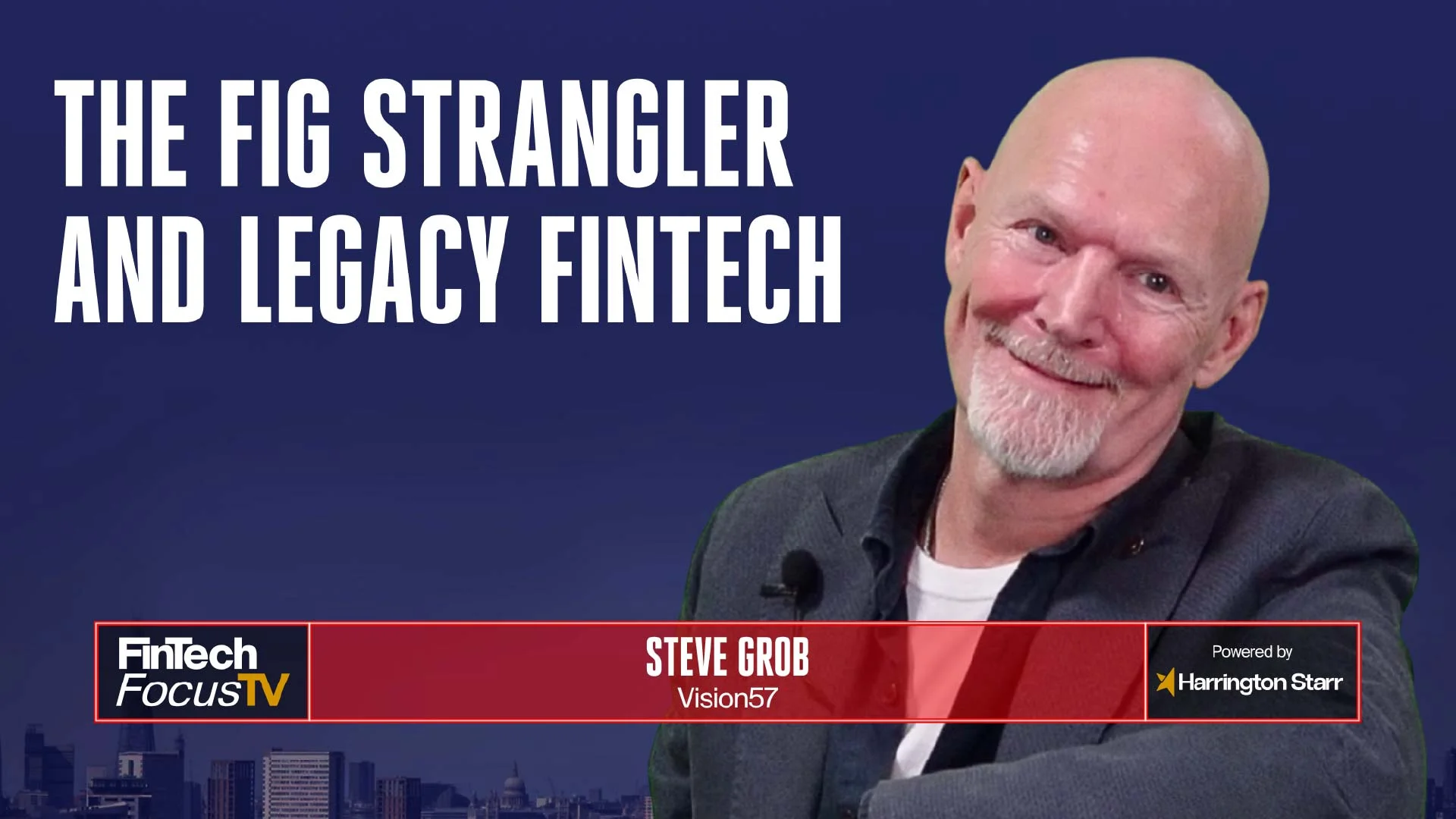
The first episode of the year is always a moment of reflection for financial services. New priorities emerge, budgets reset, and long-standing challenges are re-examined through a fresh lens. That makes it fitting that FinTech Focus TV returns with new branding and a conversation that cuts straight to one of the industry’s most persistent problems: legacy technology.
In this episode, Steve Grob, Founder of Vision57, joins Toby Babb to explore why financial institutions still struggle to modernise their technology stacks — despite years of innovation, cloud adoption, and increased FinTech investment. Rather than revisiting familiar arguments about “rip and replace”, Steve introduces a far more nuanced and practical framework: the Fig Strangler.
It’s a metaphor that resonates because it reflects reality. Financial institutions cannot simply turn off the systems that power trading, risk, settlement, and compliance. These platforms are too embedded, too interconnected, and too mission-critical. Yet leaving them untouched is no longer viable. The tension between change and inertia defines not only technology strategy, but also FinTech recruitment, banking recruitment, and how firms compete for specialist talent across capital markets.
One of the clearest themes in the conversation is the industry’s growing recognition that wholesale replacement of legacy systems rarely works. Steve highlights the very real fears that exist inside banks, brokers, and asset managers when it comes to major technology decisions.
Financial services is a heavily regulated environment. Operational failure carries reputational, financial, and regulatory consequences. For leaders responsible for these platforms, the personal risk is just as real. Careers have ended because a technology transformation went wrong.
As Steve notes, this fear often results in inertia. Even when systems are outdated, expensive to maintain, or poorly suited to modern workflows, organisations hesitate. From the outside, this looks like resistance to innovation. From the inside, it looks like risk management.
This context matters when considering financial services recruitment and FinTech recruitment agency partnerships. Firms are not just recruiting engineers to write code — they are hiring people who can navigate complexity, regulation, and organisational psychology.
As the first FinTech Focus TV episode of the year, and the first to launch under the show’s refreshed branding, this conversation arrives at a particularly relevant moment for financial services leaders. Legacy technology is no longer a future concern or a theoretical debate — it is an active constraint on growth, scalability, and hiring. As budgets reset and transformation priorities are reassessed, many banks, asset managers, and buy-side firms are asking not whether change is needed, but how to deliver it without destabilising critical operations. Steve Grob’s Fig Strangler framework speaks directly to that challenge, offering a model grounded in real-world constraints rather than idealised transformation narratives.
The Fig Strangler analogy offers a different way forward. In nature, the strangler fig does not destroy its host overnight. It grows around it, using the existing structure for support while gradually establishing its own roots. Over time, the original tree is replaced — but without sudden collapse.
Applied to financial services technology, this means:
This approach reframes transformation as an evolution, not an event. It also creates space for measurable progress, which is critical in an industry where large-scale programmes often stall under their own weight.
For leaders involved in banking recruitment, asset management recruitment, and buy-side recruitment, this has a direct impact on hiring strategy. Transformation is no longer about assembling massive, one-off project teams. It’s about building sustained capability over time.
A particularly important insight from the episode is that technology itself is only part of the issue. Steve argues that many firms remain trapped by legacy thinking, including how they structure teams and invest in capability — an area where specialist data recruitment increasingly plays a critical role.
Too often, transformation efforts begin by cataloguing what existing systems do today. While this feels sensible, it anchors organisations in the present rather than the future. The more powerful starting point is a different question entirely:
Once that vision is clear, firms can work backwards to define the capabilities required to support it. Only then does it make sense to assess which systems still belong in the architecture and which do not.
This mindset shift is increasingly visible in FinTech recruitment and quant recruitment trends. Firms are looking for professionals who can think in terms of capabilities, workflows, and outcomes — not just systems and features.
The conversation repeatedly returns to the idea of ecosystems. The era of a single vendor owning the entire desktop is fading. Instead, financial institutions are assembling constellations of specialist providers that integrate through shared standards and APIs.
This is particularly evident on the buy side, where trading firms, hedge funds, and asset managers require flexibility. No single system can excel at everything, and trying to force that model often creates more problems than it solves.
Steve points out that interoperability standards, messaging frameworks, and open architectures now make this ecosystem approach viable in ways that weren’t possible a decade ago. The result is a more modular, adaptable technology landscape.
From a buy-side recruitment and asset management recruitment perspective, this has changed what “good” looks like in technology roles. Employers increasingly value candidates who understand how systems interact, how workflows cross platforms, and how data moves through the organisation.
This shift toward ecosystems also changes how internal teams are structured. When technology environments are modular rather than monolithic, success depends less on deep expertise in a single platform and more on the ability to orchestrate multiple systems effectively. Firms need people who understand interoperability, workflow design, and how data moves across the organisation. This is particularly visible in buy-side and asset management environments, where speed, flexibility, and differentiation matter more than standardisation. As a result, hiring strategies are evolving alongside technology strategies, with growing demand for technologists who can operate confidently across vendors, platforms, and functional boundaries.
One of the reasons large transformation programmes struggle is the way return on investment is measured. Traditional models assume that value arrives at the end of a long journey — often three years or more down the line.
Steve challenges this thinking. He notes that in reality, the people running these programmes may not even be in the organisation by the time that payoff arrives. This disconnect discourages bold decision-making and reinforces caution.
The Fig Strangler model enables a different approach. By focusing on incremental capability gains, firms can demonstrate value much earlier. This might mean:
These early wins build confidence and momentum, making broader change more achievable.
This shift has implications for financial services recruitment agencies and hiring managers alike. Organisations are prioritising professionals who can deliver tangible outcomes quickly — a trend that spans FinTech recruitment, banking recruitment, and quant finance recruitment.
The episode doesn’t just examine transformation from the client side. Steve is equally clear about the responsibilities of FinTech vendors themselves.
Great technology alone is not enough. Vendors must be able to articulate:
Steve warns against a common mistake: building a product first and deciding who to sell it to later. This approach often results in scattered messaging and unfocused sales efforts.
Instead, the most successful firms have a clear positioning strategy that informs everything they do — from product development to marketing and sales.
This clarity is increasingly scrutinised by investors and acquirers, particularly in sectors like buy-side recruitment, investment management recruitment, and hedge fund recruitment, where scalability and repeatability are critical.
Another key theme is how buying behaviour in financial services has changed. Decision-makers are far more informed before they ever speak to a vendor. They read, watch, and listen long before they buy.
This means content is no longer a supporting function — it’s central to how firms establish credibility. Steve highlights the importance of thought leadership that speaks to real problems rather than product features.
This is where platforms like FinTech Focus TV play a valuable role. By facilitating open conversations about industry challenges, they allow leaders to engage earlier in the decision-making process.
The same dynamic applies when firms choose a FinTech recruitment agency or financial services recruitment partner. Buyers want evidence of understanding, not just access to networks.
As technology strategies evolve, so too do talent requirements. Across banking recruitment, asset management recruitment, and quant recruitment, firms are increasingly seeking:
These roles are not transactional hires. They sit at the intersection of technology, business, and culture — and they are becoming harder to fill.
This is why alignment between transformation strategy and recruitment strategy matters more than ever. Hiring in isolation from long-term technology goals only reinforces fragmentation.
One of the most practical implications of the Fig Strangler approach is how it reshapes hiring decisions. Incremental transformation does not require large, one-off project teams assembled around a single system replacement. Instead, it demands sustained capability built over time. Financial services organisations increasingly need technologists who are comfortable working in hybrid environments, bridging legacy platforms and modern services simultaneously. This places greater emphasis on adaptability, domain knowledge, and long-term thinking when building teams. For firms engaging in FinTech recruitment and financial services recruitment, alignment between transformation goals and hiring strategy is critical. Without it, even the most carefully planned technology roadmap risks being undermined by skills gaps and misaligned roles.
When asked about the future, Steve is realistic. There is no single year when legacy technology suddenly disappears. Progress will continue to be evolutionary.
Artificial intelligence will play a role, but Steve cautions against overestimating how quickly it will transform core trading workflows. More immediate impact will come from proven transformation models, stronger ecosystems, and deeper partnerships between clients and vendors.
As these approaches mature, they will shape how firms invest, innovate, and hire — reinforcing the importance of thoughtful FinTech recruitment, buy-side recruitment, and financial services recruitment strategies, and aligning closely with our approach to supporting long-term change in financial services organisations.