The Changing Face of Leadership in Financial Technology
12 March, 2026
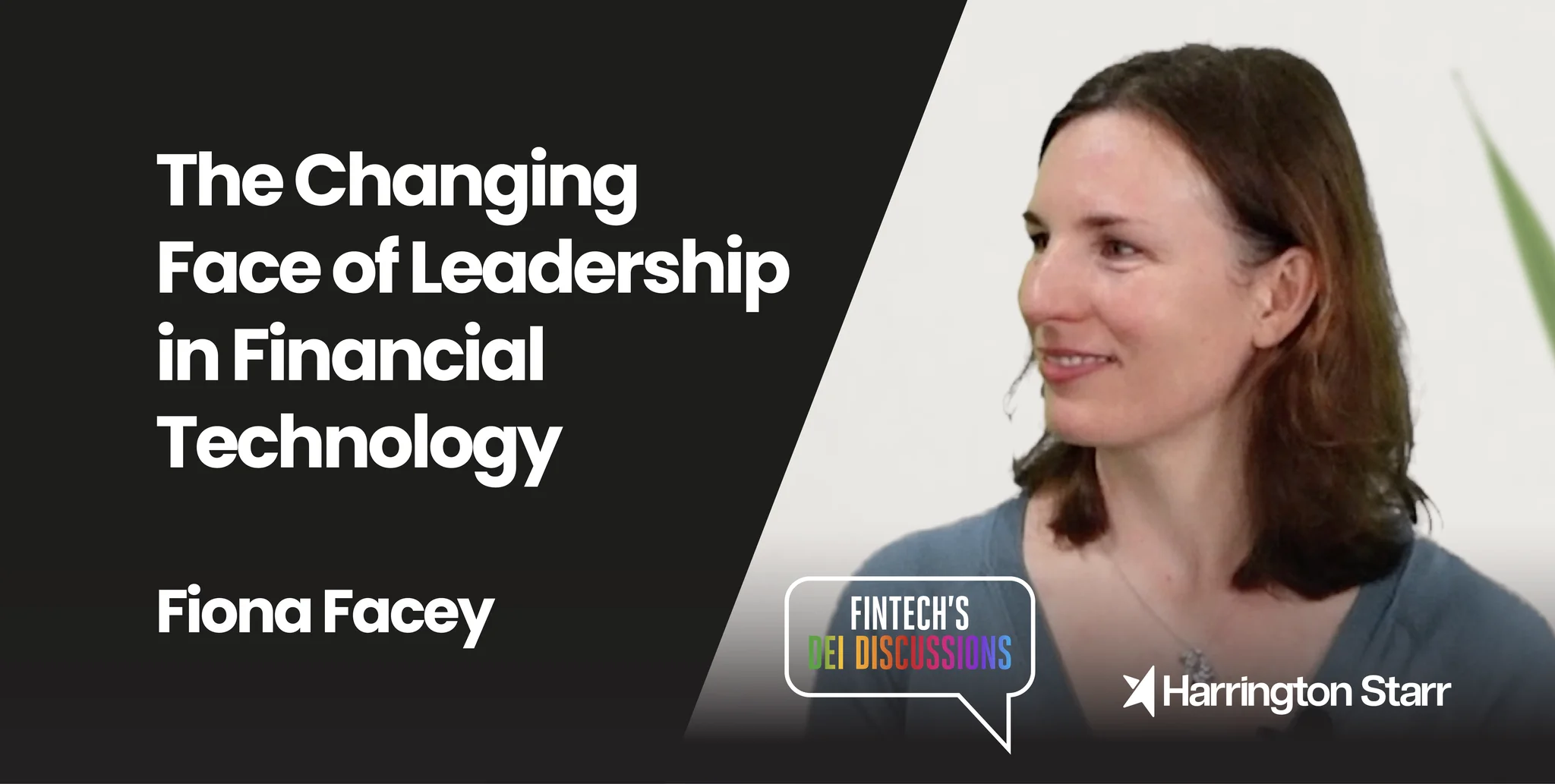

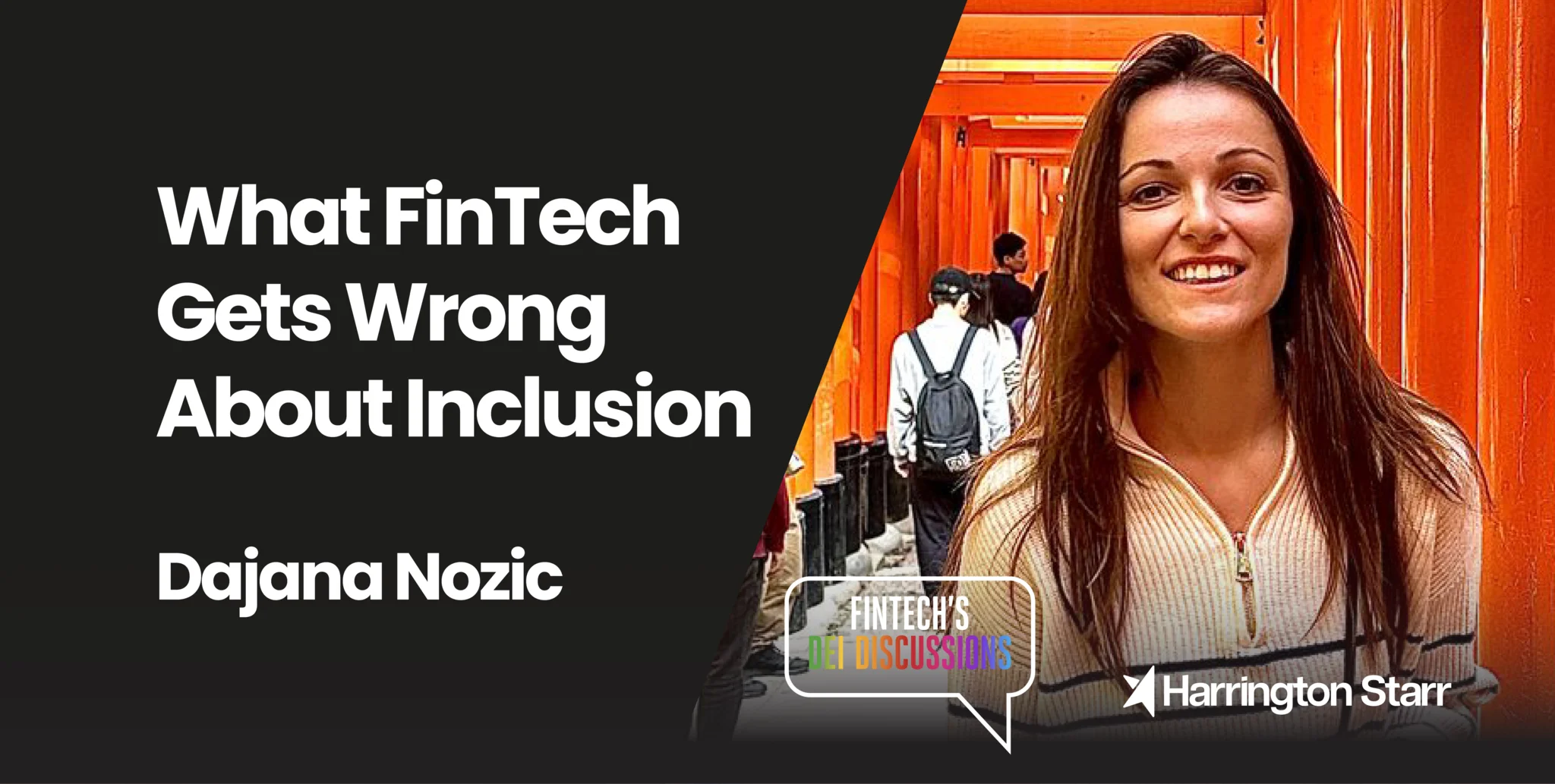
In this episode of FinTech’s DEI Discussions, Nadia is joined by Dajana Nozic, Co-Founder and COO at Nya, for a conversation about inclusion, leadership, and what meaningful diversity really looks like inside FinTech organisations. Rather than focusing on surface-level initiatives or headline commitments, the discussion centres on lived experience, decision-making at the leadership level, and the long-term consequences when inclusion is treated as a compliance exercise rather than a strategic priority.
For anyone involved in FinTech recruitment, leadership hiring, or building high-performing technology teams, this episode offers valuable insight into how companies succeed or stall based on the choices they make around people. As FinTech continues to mature as an industry, the conversation highlights why diversity of thought, authentic leadership, and active listening are no longer optional but essential.
Dajana’s journey into FinTech is a powerful reminder that there is no single route into the industry. She begins by sharing her unconventional career background, having started out in criminal law and working for the public prosecutor before ever considering a role in financial technology. At that stage in her career, FinTech was not a destination she had planned or aspired to. Like many people outside the sector, her perception of finance was shaped by rigid hierarchies, conservative environments, and a lack of diversity.
Her entry into FinTech came through an unexpected suggestion. After leaving her role in criminal law, a flatmate who worked in a FinTech compliance team encouraged her to consider applying her skills in a new context. What began as a tentative step quickly became a long-term career, as Dajana discovered how different FinTech environments were from traditional banks. Working in an early-stage company gave her exposure to multiple areas of the business, allowing her to understand not just compliance but how products, teams, and leadership decisions intersect.
This experience mirrors what many FinTech recruitment specialists see across the market. Some of the most impactful leaders in financial technology do not follow linear career paths. Instead, they bring transferable skills, different ways of thinking, and broader perspectives that strengthen teams and improve decision-making. Dajana’s story underlines why hiring purely for familiarity or industry pedigree can limit growth.
When asked what inclusion means to her today, Dajana is clear that the conversation has evolved but remains challenging, particularly in male-dominated environments such as FinTech and crypto. Much of her career has been spent working with startups and scaleups, where leadership teams are often founder-led and predominantly male. While this is not inherently negative, she explains that problems arise when leadership teams lack balance and fail to value perspectives outside their own.
Dajana reflects on her experience serving on boards, where she has frequently been the only woman in the room. In those situations, her perspective was shaped not just by gender, but by her exposure to a wide range of companies, regulatory environments, and business models. Inclusion, from her perspective, is not about representation alone, but about ensuring that voices are genuinely heard and valued in decision-making processes.
For FinTech businesses thinking about leadership hiring and board composition, this insight is critical. Recruitment strategies that focus solely on optics or minimum compliance standards risk undermining long-term performance. True inclusion requires leaders who are prepared to listen, challenge assumptions, and integrate diverse viewpoints into strategy.
One of the most striking parts of the conversation centres on the dangers of tokenism at board and leadership level. Dajana shares her observations of companies appointing board members primarily to satisfy regulatory expectations rather than to strengthen governance. In some cases, individuals are placed in senior roles without being given real influence or authority, effectively becoming symbolic appointments rather than strategic contributors.
This approach, she explains, creates multiple risks. While it may help a company obtain a licence or pass an initial regulatory hurdle, the problems often surface once the business begins operating. Leadership teams that are not aligned, or that fail to respect the expertise of appointed board members, are more likely to encounter governance issues, regulatory friction, and internal conflict.
From a FinTech recruitment perspective, this highlights why leadership hiring must be approached with intent. Appointing the right people into senior roles is not just about satisfying immediate requirements, but about building sustainable businesses. Poor leadership alignment can slow expansion, damage relationships with regulators, and ultimately erode trust both internally and externally.
Beyond regulatory risk, Dajana emphasises the cultural consequences of inauthentic leadership structures. When board members or senior leaders are not genuinely engaged, it sends a powerful message throughout the organisation. Employees quickly recognise when leadership roles exist in name only, and this can undermine morale, psychological safety, and trust.
Company culture, particularly in FinTech environments where growth is fast and pressure is high, is shaped by what leaders do rather than what they say. When leadership teams fail to listen or dismiss alternative perspectives, innovation suffers. This is especially damaging in a sector that relies on adaptability, creativity, and problem-solving to remain competitive.
For FinTech recruitment firms and hiring managers alike, this reinforces the importance of cultural alignment. Hiring leaders who are technically capable but culturally disconnected can create long-term challenges that are far harder to resolve than short-term skills gaps.
Drawing on her experience across multiple organisations, Dajana highlights a consistent pattern. The most successful FinTech companies are those with genuinely diverse leadership teams. These teams often combine individuals with deep experience in traditional finance, including banks and regulatory institutions, alongside entrepreneurial founders who bring speed, innovation, and risk appetite.
This balance allows businesses to innovate without repeating avoidable mistakes. Leaders with experience in established financial institutions understand regulatory expectations, risk management, and long-term sustainability. When these insights are respected and integrated into decision-making, companies are better equipped to scale responsibly.
As FinTech continues to evolve, it is no longer a niche or experimental sector. It is becoming an established part of the wider financial ecosystem. Recruitment strategies that prioritise diversity of thought, rather than uniformity of background, are therefore essential for long-term success.
A key theme in the discussion is the increasing maturity of FinTech as an industry. Dajana notes that while FinTech was once seen as disruptive and unconventional, it is now subject to many of the same expectations as traditional financial institutions. Regulation is tighter, competition is stronger, and the margin for error is smaller.
In this environment, leadership decisions carry greater weight. Founders can no longer rely solely on speed or innovation to succeed. They must build teams that combine creativity with discipline, and ambition with accountability. Recruitment plays a central role in this transition, particularly when hiring for senior roles that shape strategy and culture.
For FinTech recruitment specialists, this means advising clients not just on who can do the job, but on who will help the business mature in the right way. The episode reinforces why thoughtful hiring is a strategic investment rather than a transactional process.
Towards the end of the conversation, Dajana shares insight into her latest venture, which sits outside traditional FinTech but remains closely aligned with her values around inclusion. Alongside a female co-founder, she is building a female-first AI personal coaching platform focused on fitness and health. The product is designed to deliver tailored workout and nutrition plans aligned with female hormones and cycles, addressing a long-standing gap in a market dominated by male-centric research and assumptions.
While this venture operates in a different sector, the underlying principle is consistent with her FinTech experience. Identifying gaps, questioning defaults, and building solutions that genuinely serve underrepresented groups. Her transition into this space demonstrates how skills developed in FinTech, such as problem-solving, scaling, and navigating complex environments, can be applied elsewhere.
For professionals considering career moves within or beyond FinTech, this part of the discussion reinforces the value of transferable skills and purpose-driven leadership.
One of the most practical takeaways from the episode is Dajana’s emphasis on active listening. She describes listening not as a passive skill, but as an intentional practice that requires effort and self-awareness. Too often, leaders listen only to respond, forming conclusions before fully understanding another perspective.
In leadership and recruitment contexts, this behaviour can have significant consequences. When leaders fail to listen, they miss valuable insights, alienate team members, and reinforce existing biases. Active listening, by contrast, creates space for different viewpoints, improves decision-making, and strengthens trust.
Nadia reflects on how common this issue is, noting how frequently conversations are cut short by assumptions. The exchange reinforces the idea that inclusion begins not with policies, but with everyday behaviours.
As the episode draws to a close, the conversation returns to a central theme of FinTech’s DEI Discussions: moving from intention to action. Inclusion is not achieved through statements or symbolic gestures, but through consistent choices in hiring, leadership, and culture.
For FinTech companies navigating growth, regulation, and competition, this message is particularly relevant. Recruitment decisions shape not only who joins an organisation, but how it operates, innovates, and evolves. Hiring leaders who value inclusion, diversity of thought, and active listening is fundamental to building resilient teams.
For Harrington Starr, as a FinTech recruitment business working closely with clients across financial technology, these insights align directly with the realities of the market. Successful hiring is about understanding people, not just roles, and recognising that the right leadership choices today determine long-term success.
This episode with Dajana Nozic offers a compelling reminder that inclusion in FinTech is not a trend or a tick-box exercise. It is a leadership responsibility that influences governance, culture, and performance. Through her experiences across FinTech, crypto, and entrepreneurship, Dajana provides a grounded perspective on what works, what fails, and why authentic inclusion matters more than ever.
Hosted by Nadia, FinTech’s DEI Discussions continues to create space for honest conversations that challenge assumptions and encourage progress. For leaders, hiring managers, and professionals across the FinTech ecosystem, this episode is a valuable resource for understanding how thoughtful recruitment and inclusive leadership can drive better outcomes for businesses and people alike.