The Changing Face of Leadership in Financial Technology
12 March, 2026
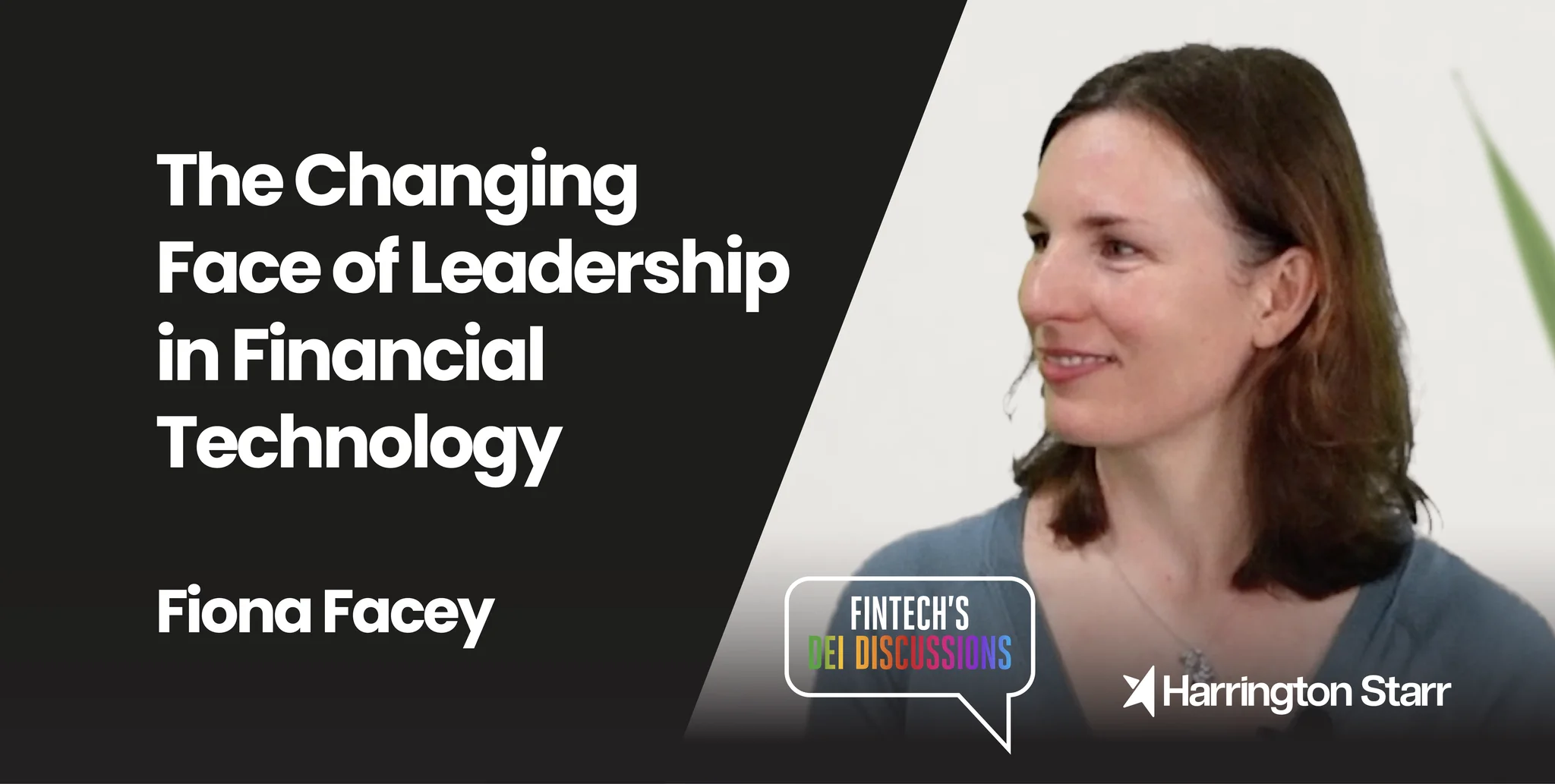

On this episode of FinTech’s DEI Discussions, Nadia welcomes Lyndsey Higgins, Senior Vice President – Head of Learning & Development and Business Services at Rimes Technologies, for an in-depth conversation on what genuine inclusion really looks like inside FinTech organisations. From career longevity and leadership allyship to ESG, belonging, and people-first culture, the discussion explores why inclusion is not a “nice to have” but a critical driver of performance, retention, and long-term success in financial technology.
Lyndsey opens by sharing her own journey into FinTech, a path that, like many in the industry, was not meticulously planned but shaped by opportunity, curiosity, and people. Having joined Rimes over two decades ago as a graduate, she reflects on the irony of building such a long career in a sector she stumbled into by accident. That longevity, she explains, has been made possible by strong role models, encouraging managers, and allies who helped shape not only who she wanted to become as a leader, but also who she did not want to be. This grounding in people-centric leadership sets the tone for a conversation that consistently links inclusive culture to sustainable FinTech growth.
From a FinTech recruitment and talent perspective, Lyndsey’s story challenges the assumption that the sector is defined by short tenures and constant movement. Her career progression across departments at Rimes has given her a breadth of experience that continues to inform her work today, particularly her focus on enabling people to do their best work. She speaks openly about how her current role in learning and development is centred on building capability, advocating for ESG programmes, and creating office and virtual environments where employees feel they belong.
This emphasis on belonging is a recurring theme throughout the episode and one that resonates strongly in FinTech hiring conversations. As Nadia highlights, attracting talent is only one part of the equation; retaining that talent requires environments where individuals feel supported, heard, and able to invest in their long-term careers. Lyndsey reinforces this by explaining that her role is fundamentally about enabling people, not just delivering training, but ensuring systems, policies, and behaviours support equitable access to opportunity.
When asked what inclusion means to her, Lyndsey is clear that it goes far beyond surface-level diversity initiatives. Inclusion, she explains, is about psychological safety, equitable access to opportunity, and ensuring that policies translate into real lived experiences for employees. While many FinTech firms talk about diversity on their websites, job adverts, and reports, the real measure of progress is whether people genuinely feel they belong.
She makes a powerful distinction between diversity and belonging, noting that diversity might get people through the door, but belonging is what makes them stay. Without respect, support, and the safety to speak openly, inclusion efforts fall flat. For FinTech leaders and hiring managers, this message is particularly relevant at a time when competition for skilled technologists remains intense and employee expectations around culture are higher than ever.
Lyndsey also highlights the risk of performative inclusion, where organisations invest in visible ESG or DEI activity without building the foundational policies and behaviours needed to sustain them. Fancy events and initiatives, she notes, mean very little if the basics are not in place. True inclusion must come from the top and be embedded into everyday working practices.
A significant part of the discussion focuses on ESG and its role in shaping inclusive FinTech cultures. For Lyndsey, ESG is not about compliance or box-ticking, but about accountability, education, and long-term impact. At Rimes, ESG has been embedded into learning programmes and linked closely with inclusion, reinforcing the idea that responsible business practices and people-first culture go hand in hand.
She explains that when Rimes began developing its ESG strategy, there was no template to follow. What made progress possible was genuine leadership buy-in and a shared belief that ESG was not only the right thing to do, but also good for the business. Starting with environmental initiatives and expanding across social and governance areas, the organisation learned through experience which initiatives resonated most with employees.
Interestingly, Lyndsey notes that some of the most meaningful progress happened during the COVID period, when physical connection was limited but inclusion initiatives accelerated. This, she suggests, demonstrates that inclusion is not constrained by geography or office presence, but enabled by intention and action.
Lyndsey shares several examples of how ESG and inclusion initiatives have become a core part of the employee experience at Rimes. Annual ESG-focused learning sessions address topics such as unconscious bias, workplace wellbeing, climate awareness, and gender roles, delivered by both internal and external experts. These initiatives are not positioned as optional extras but as integral to professional development.
Employee resource groups also play a crucial role in fostering community and belonging. Lyndsey highlights several ERGs, including the women’s network Illuminate, which runs sessions addressing topics such as menopause awareness and grief in the workplace. She speaks candidly about the importance of acknowledging difficult moments, such as the loss of a colleague, and creating safe spaces for people to process and support one another.
Another ERG based in the Philippines focuses on environmental and community initiatives, reinforcing the global nature of inclusion in FinTech organisations. Mental health support, including trained mental health first aiders, further underlines the organisation’s commitment to wellbeing as part of performance, not separate from it.
A central theme of the episode is the link between inclusion and learning and development. Lyndsey explains that inclusive L&D means designing programmes that actively remove barriers, rather than assuming equal access exists by default. This includes mentoring schemes for underrepresented groups, inclusive leadership training for managers, and systems that give everyone a fair chance to progress.
She emphasises that inclusion often comes down to small, human actions. Respecting time zones, accommodating different working patterns, encouraging quieter voices in meetings, and being mindful of personal responsibilities all contribute to a culture where people feel seen and valued. These everyday behaviours, she argues, are just as important as formal policies.
Lyndsey also shares a deeply personal story about struggling with anxiety around public speaking earlier in her career, an experience that makes her current role in learning and development particularly meaningful. Supportive colleagues, coping strategies, and belief from others helped her build confidence over time. This example underscores the impact that inclusive leadership and community can have on individual growth and confidence.
The conversation naturally turns to confidence and its uneven distribution across workplaces. Nadia reflects on the idea that confidence is often a gift, one that some people are given early in their careers, while others must build over time. Lyndsey’s story highlights how supportive environments can help close that gap, enabling talented individuals to step into opportunities they might otherwise avoid.
From a FinTech recruitment perspective, this insight is particularly relevant. Organisations that invest in confidence-building, mentorship, and sponsorship are more likely to unlock hidden talent and diversify leadership pipelines. Lyndsey notes that inclusive workplaces consistently see improvements in retention, engagement, and innovation, as people feel empowered to contribute fully.
As the episode draws to a close, Nadia asks what more can be done to drive inclusion across FinTech workplaces. Lyndsey’s response centres on listening, action, and accountability. Inclusion, she explains, is not the responsibility of HR alone but a shared obligation across the organisation. Auditing policies, challenging bias in hiring, and making inclusion measurable are all critical steps.
She also stresses the importance of active sponsorship, advocating for people when they are not in the room, and ensuring inclusive meeting practices in hybrid and global teams. Language, structure, and participation all shape who feels able to contribute, and small adjustments can have a significant impact.
Celebrating cultural moments, recognising inclusive leaders, and supporting early-career talent through coaching and mentorship are further ways organisations can embed inclusion into their norms. Lyndsey highlights partnerships with external initiatives that support young people entering FinTech, reinforcing the importance of widening access to the industry.
Throughout the episode, one message remains consistent: inclusion is not a one-off initiative but a daily practice that must be deeply embedded into organisational culture. Leaders must walk the talk, modelling inclusive behaviours and holding themselves accountable. When done well, inclusion becomes a competitive advantage, supporting stronger FinTech recruitment outcomes, higher retention, and more resilient teams.
For Harrington Starr and the wider FinTech recruitment community, this conversation reinforces the growing expectation that employers offer more than just competitive salaries or cutting-edge technology. Candidates increasingly seek workplaces where they can belong, grow, and build long-term careers. As Lyndsey’s journey demonstrates, when people feel supported and valued, they are more likely to stay, contribute, and lead.
Nadia closes the episode by encouraging listeners to reflect on what they can take back into their own organisations, whether that is starting a conversation, supporting a colleague, or challenging existing practices. The message is clear: meaningful inclusion is built through intention, consistency, and action, and every individual has a role to play.