Why Career Pivots Supercharge Growth in FinTech
31 March, 2026
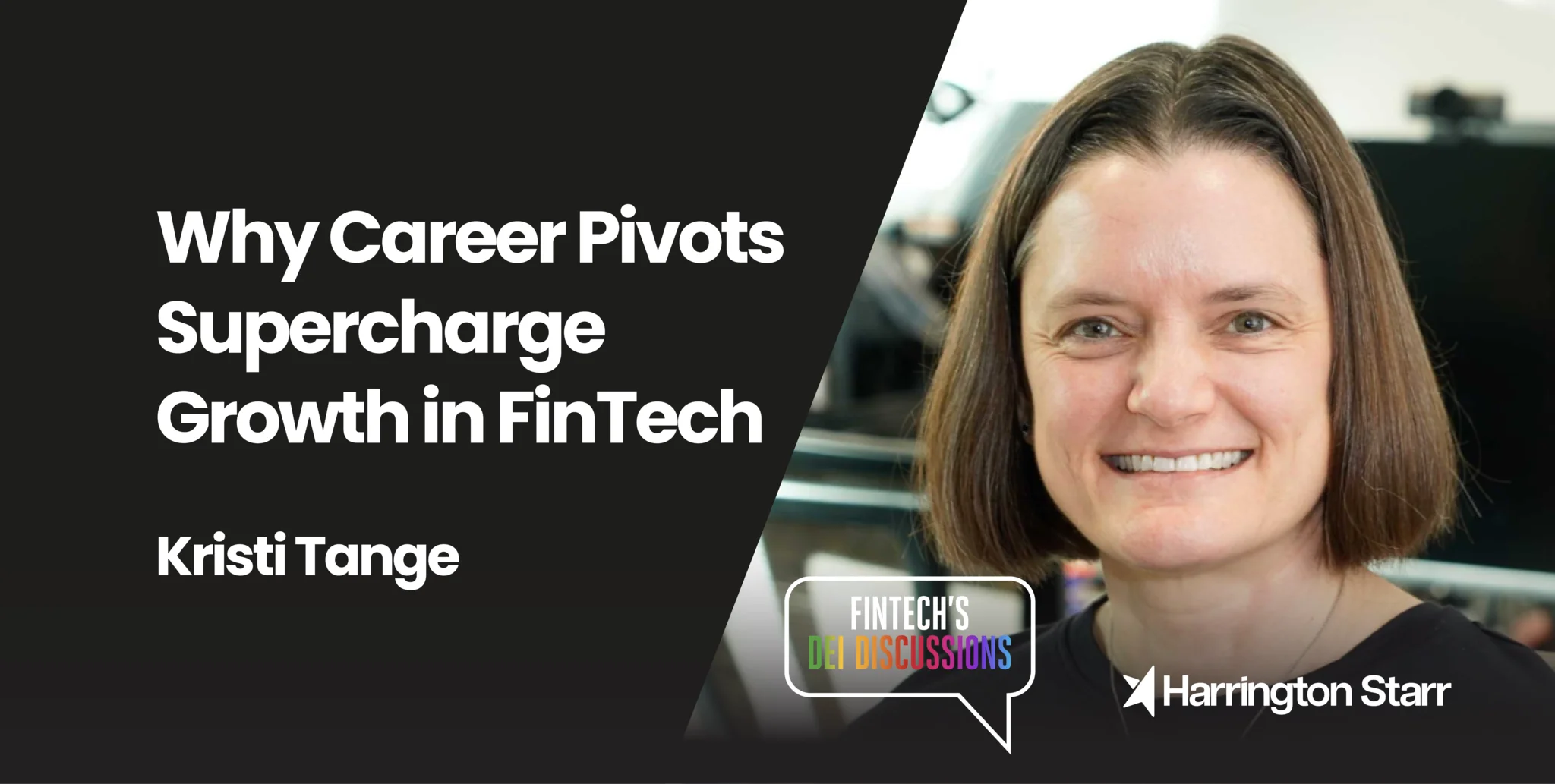

In this episode of FinTech’s DEI Discussions, hosted by Nadia Edwards-Dashti, the conversation centres on one of the most important and often overlooked drivers of inclusive hiring in financial technology: transferable skills. Joined by Julie Sutton, Head of Growth, Europe at Paymentology, this discussion moves beyond surface-level diversity conversations and into the structural shifts needed across FinTech recruitment to unlock wider, more diverse talent pools.
This episode delivers on that promise by exploring how hiring practices, career progression, and leadership mindsets must evolve to create meaningful access and long-term inclusion.
Julie Sutton brings both professional expertise and personal experience to the conversation, offering a perspective shaped by a non-linear career path, early experience in recruitment, and leadership within a high-growth FinTech environment. Her insights are particularly relevant for businesses looking to improve hiring outcomes, as well as candidates navigating increasingly competitive FinTech job markets.
A central theme of the episode is the idea that traditional hiring frameworks in financial technology often exclude highly capable individuals. Julie reflects on her own journey, explaining that she did not follow a conventional academic path due to family and financial circumstances. This immediately challenges the assumption that linear education and experience are the only valid indicators of potential.
Instead, Julie argues that employers need to rethink how they define value in candidates. She highlights that many individuals bring relevant skills without having followed the expected route into FinTech, yet are frequently overlooked because their CVs do not align with rigid job specifications.
This insight is particularly important for FinTech recruitment businesses and hiring managers who are tasked with identifying talent in an increasingly competitive market. By focusing too heavily on traditional markers such as degrees or specific industry experience, organisations risk missing out on individuals who could deliver strong performance and long-term impact.
Julie makes it clear that the issue is not a lack of talent, but rather a lack of recognition. When employers broaden their perspective and evaluate what candidates can actually do, rather than where they have done it, entirely new talent pools become accessible.
At the heart of the discussion is the concept of transferable skills and their role in improving hiring outcomes across financial technology. Julie defines these as behavioural and capability-based attributes that can be applied across roles, industries, and career stages.
She explains that when assessing candidates, she looks for signals such as the ability to learn quickly, communicate clearly, demonstrate curiosity, and manage stakeholders effectively. These are not niche or role-specific skills, but universal capabilities that underpin success in almost any environment.
This approach is particularly powerful in FinTech, where rapid innovation means that technical skills can quickly become outdated. By prioritising adaptability and learning ability, organisations can build teams that are better equipped to evolve alongside the industry.
Julie also emphasises that many candidates underestimate themselves because their experience does not directly match job descriptions. However, when those experiences are translated into skills such as problem-solving, leadership, or delivery, it becomes clear that they are not starting from scratch, but instead redirecting existing strengths.
For FinTech recruitment strategies, this represents a significant shift. It moves hiring from a checklist-based approach to a more nuanced evaluation of potential, ultimately leading to stronger, more diverse teams.
Interestingly, Julie credits her early career in recruitment as one of the most formative experiences in developing these transferable skills. She describes recruitment, particularly contract recruitment, as a highly demanding environment that builds resilience, communication skills, and commercial awareness.
Through this experience, she learned how to ask better questions, structure communication effectively, and take ownership of outcomes. These skills, while not technical in nature, became foundational to her success in later roles within FinTech.
This perspective is particularly relevant for Harrington Starr as a FinTech recruitment business. It reinforces the idea that recruitment itself is not just a gateway into the industry, but a training ground for skills that are highly valued across financial technology roles.
Julie highlights that asking good questions, while seemingly simple, is a “superpower” that enables better decision-making, stronger relationships, and improved outcomes. Similarly, ownership is positioned as a critical trait that underpins leadership and career progression.
These insights demonstrate that early career experiences, even those outside of traditional FinTech pathways, can provide a strong platform for long-term success.
Another key theme explored in the episode is the value of career pivots and the skills gained through diverse experiences. Julie shares her journey of transitioning between roles and even stepping outside of traditional corporate environments to build her own business in therapy and counselling.
This period required her to develop new skills, including branding, client acquisition, and business development. While this may seem unrelated to FinTech at first glance, Julie explains how these experiences contributed to her overall capability and perspective.
Each pivot in her career added a new layer of skills that she could draw upon in future roles. This reinforces the idea that career progression is not always linear, and that diverse experiences can be a significant asset rather than a disadvantage.
For candidates in the FinTech job market, this is an important message. It encourages individuals to view their experiences holistically and recognise the value of skills developed across different contexts.
For employers, it highlights the importance of looking beyond traditional career paths and recognising the broader capabilities that candidates bring.
Julie also offers practical advice for individuals looking to progress their careers within financial technology. She encourages candidates to actively build a portfolio of transferable skills by seeking out experiences that expand their capabilities.
This could include developing presentation skills, leading initiatives, analysing problems, or mentoring others. The key is to take ownership of career development and actively pursue opportunities to grow.
She also emphasises the importance of becoming comfortable with being a beginner again. In a fast-moving industry like FinTech, continuous learning is essential, and individuals must be willing to step into unfamiliar territory.
Julie acknowledges that this can be challenging, particularly for those who are used to being experts in their field. However, she argues that those who are willing to learn in public, seek feedback, and embrace failure are often the ones who achieve the greatest success.
This mindset is particularly relevant in today’s FinTech job market, where adaptability and resilience are increasingly valued by employers.
From an employer perspective, Julie outlines several key areas where organisations can improve their hiring and development practices. She stresses the importance of hiring for capability and trajectory, rather than solely focusing on past experience.
This involves assessing whether candidates have the potential to lead, adapt, and deliver, rather than simply ticking boxes on a job description. While experience is important, it should not be the only factor considered.
Julie also highlights the critical role of onboarding and coaching in setting employees up for success. She notes that in fast-paced environments, there is often a “sink or swim” mentality, which can lead to performance issues that are actually the result of poor onboarding rather than a lack of ability.
By investing time in structured onboarding and ongoing coaching, organisations can significantly improve retention and performance. This aligns closely with best practices in FinTech recruitment, where long-term success is dependent not just on hiring the right people, but also on enabling them to thrive.
Another key point Julie raises is the importance of clear expectations. She explains that employees often struggle because they do not fully understand what success looks like within their organisation. By defining clear goals and standards, businesses can reduce ambiguity and accelerate development.
Throughout the episode, there is a consistent emphasis on moving from awareness to action when it comes to diversity and inclusion in financial technology. Julie’s focus on transferable skills provides a practical framework for achieving this.
Rather than relying on broad statements about diversity, organisations can implement tangible changes to their hiring processes that expand access to opportunities. This includes rethinking job specifications, broadening candidate criteria, and investing in development.
Nadia reinforces this by highlighting the importance of recognising “invisible talent” and ensuring that it is given the opportunity to succeed. This aligns with the broader goals of FinTech’s DEI Discussions, which aim to drive meaningful change across the industry.
For FinTech recruitment businesses, this represents both a challenge and an opportunity. By adopting more inclusive hiring practices, they can not only improve outcomes for clients but also contribute to a more diverse and innovative industry.
As the conversation concludes, it becomes clear that the future of FinTech recruitment will be shaped by how effectively organisations can identify and develop talent. Transferable skills offer a powerful tool for achieving this, enabling businesses to move beyond traditional hiring models and unlock new sources of capability.
Julie’s insights highlight that the most successful organisations will be those that prioritise adaptability, invest in development, and create environments where individuals can grow. This requires a shift in mindset, from focusing on past experience to recognising future potential.
For candidates, the message is equally clear. By building and showcasing transferable skills, taking ownership of their development, and embracing continuous learning, they can position themselves for success in a rapidly evolving industry.
Ultimately, this episode of FinTech’s DEI Discussions provides a compelling case for rethinking how talent is identified, developed, and supported within financial technology. It challenges both individuals and organisations to move beyond conventional approaches and adopt strategies that are more inclusive, dynamic, and aligned with the realities of the modern FinTech landscape.